
[A1] Travel & Transport ① “Finding Your Way in Berlin”
On Saturday, Luna, Leo, and Mobi head into the city: a bus stop and a ticket, a driver who tells them to board at the back, Alexanderplatz, a street they can’t find even with a map, directions at the information desk (straight ahead, left, right), signs, entrance, exit, and returning by Tram, S‑Bahn, and taxi. Twenty-five sentences on public transport and directions are woven into a single episode.

Am Samstag fahren Leo, Mobi und ich in die Stadt.
On Saturday, Leo, Mobi, and I go into the city.

Die Haltestelle ist direkt vor meinem Haus.
The stop is right in front of my house.
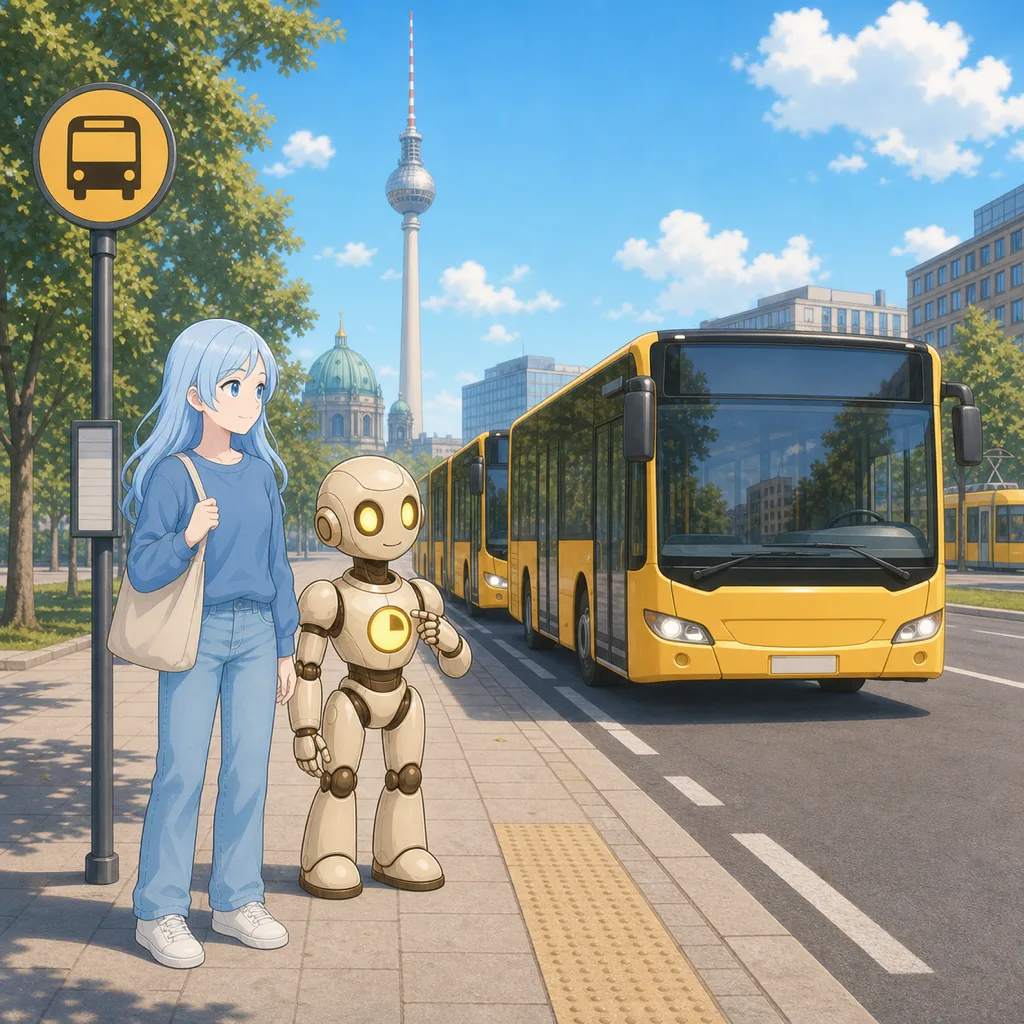
Der Bus kommt alle zehn Minuten.
The bus comes every ten minutes.
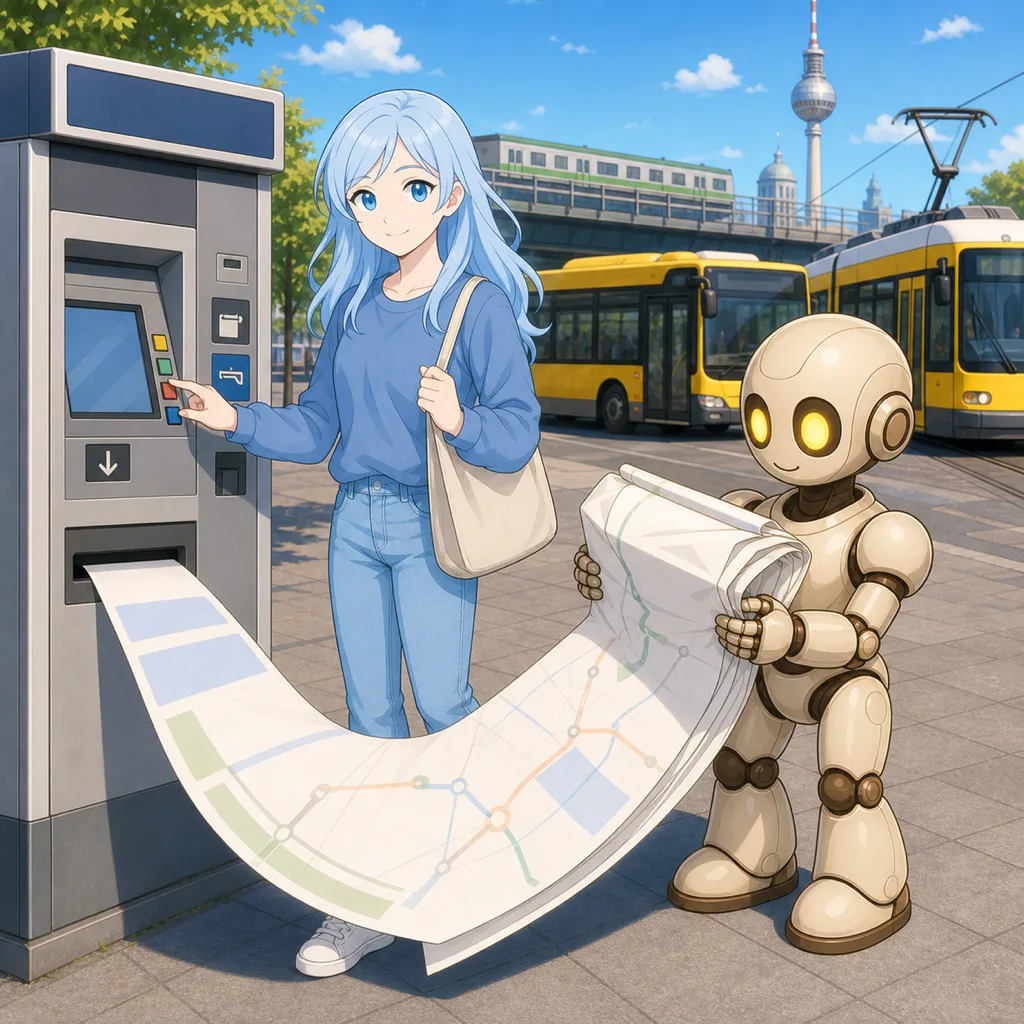
Ich kaufe eine Fahrkarte am Automaten.
I buy a ticket from the machine.
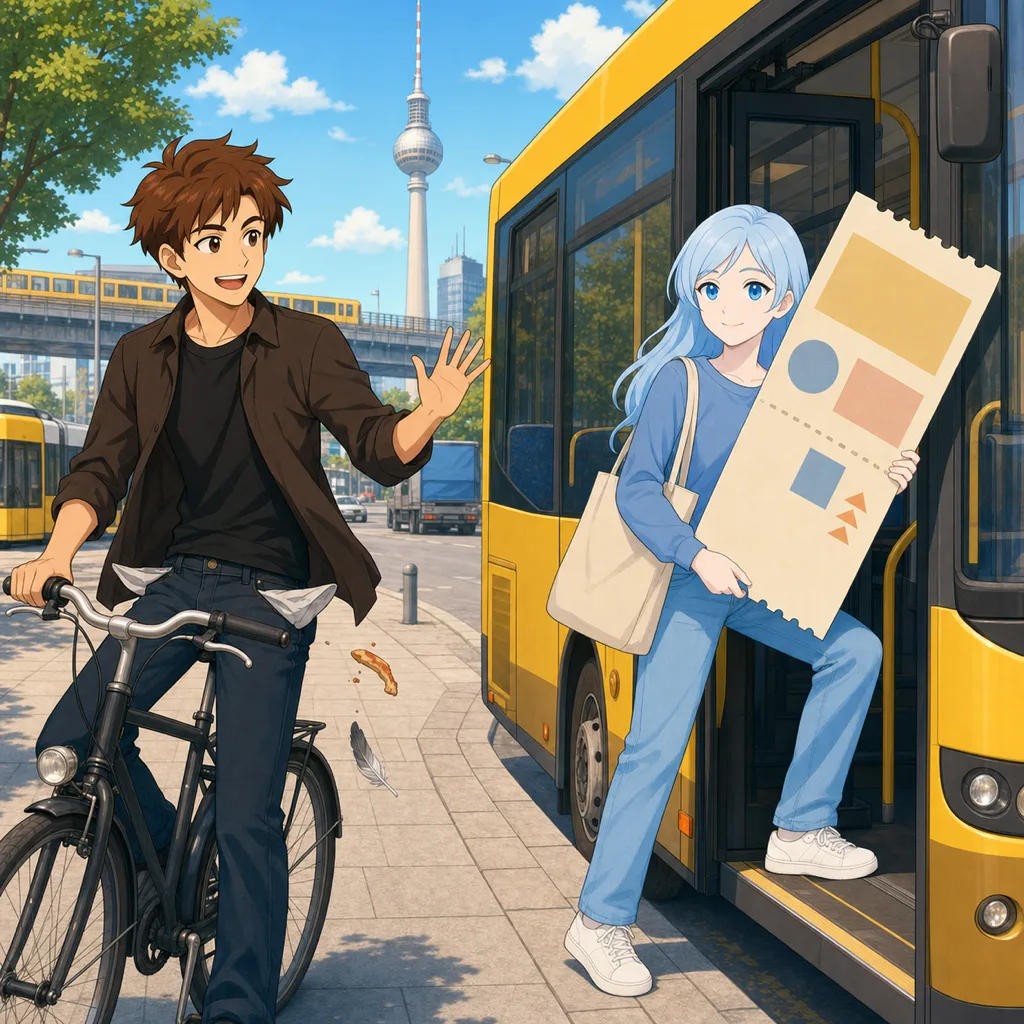
Leo hat kein Ticket. Er fährt mit dem Fahrrad.
Leo doesn't have a ticket. He goes by bike.
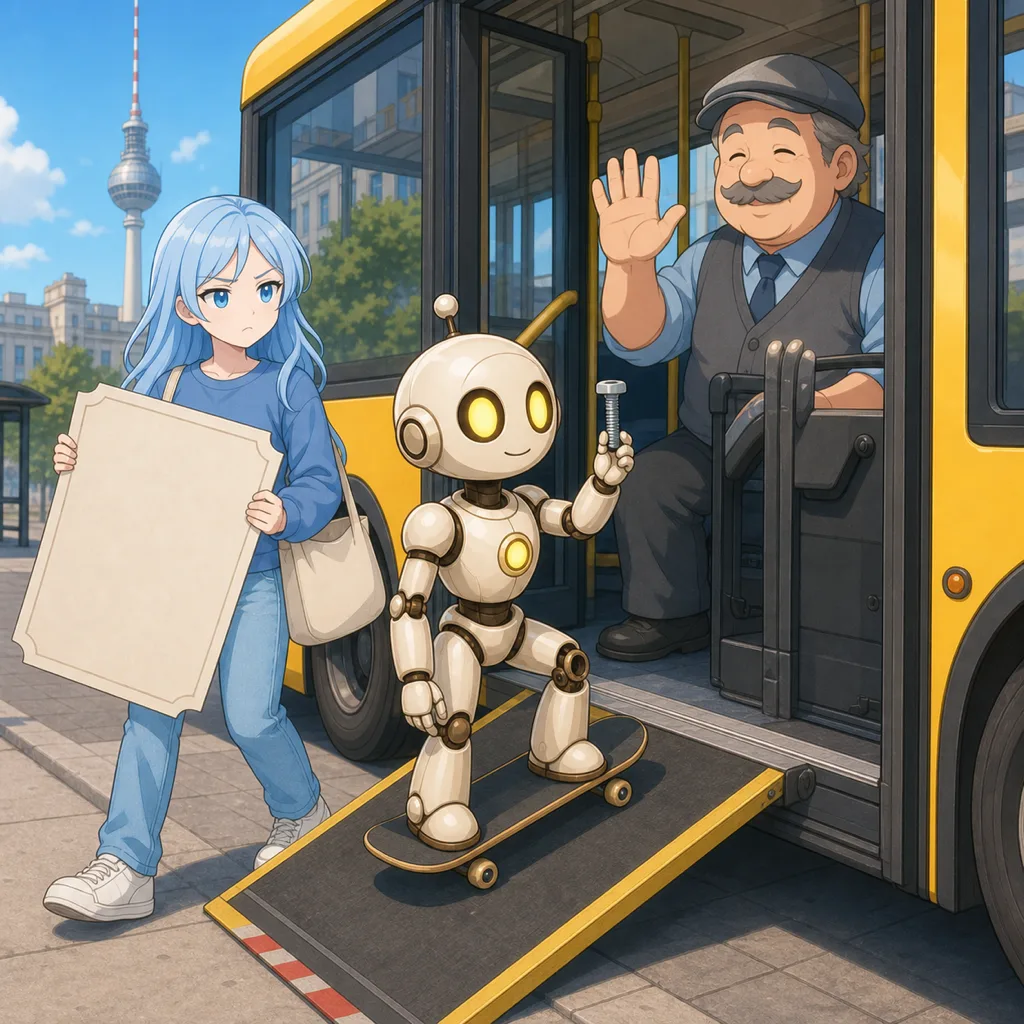
Mobi steigt in den Bus ein. Er braucht kein Ticket.
Mobi gets on the bus. He doesn't need a ticket.
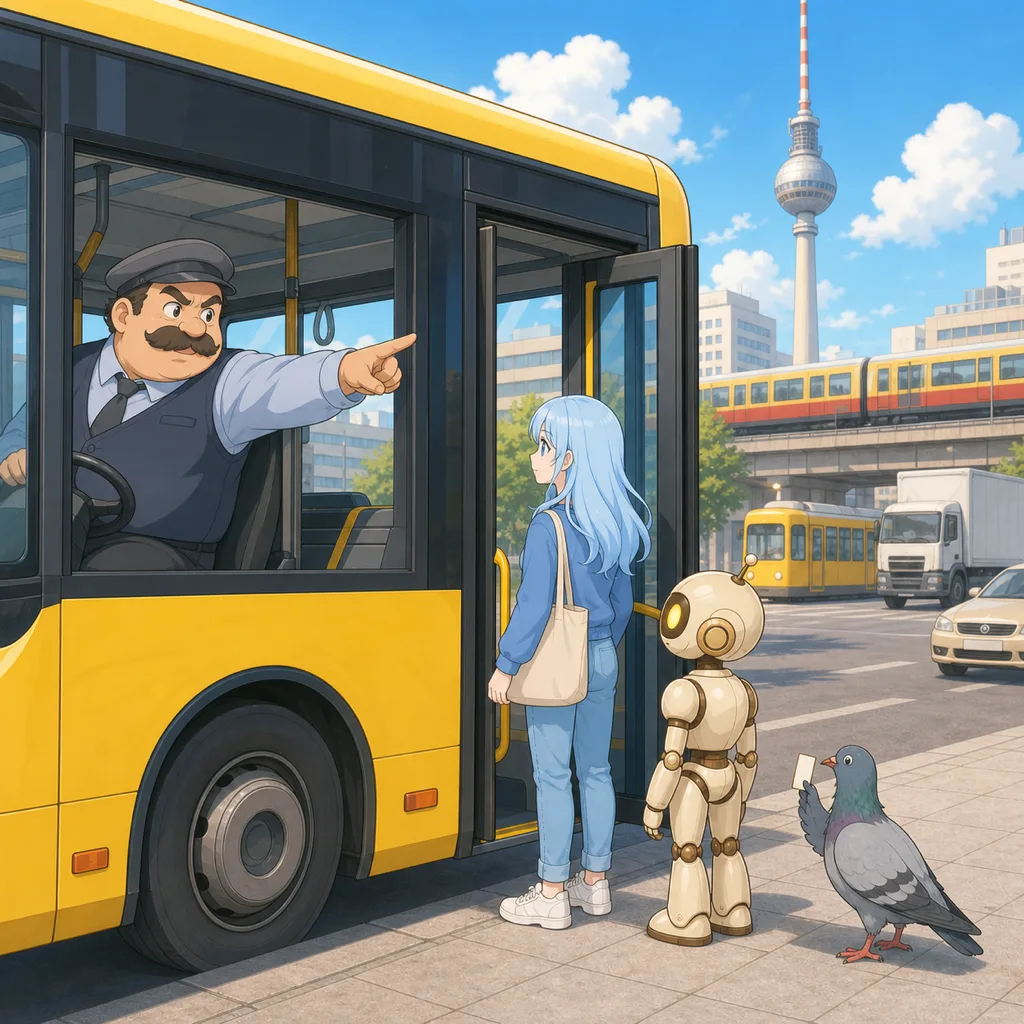
Der Fahrer sagt: „Bitte hinten einsteigen!“
The driver says: "Please board at the back!"

Mobi und ich steigen am Alexanderplatz aus.
Mobi and I get off at Alexanderplatz.
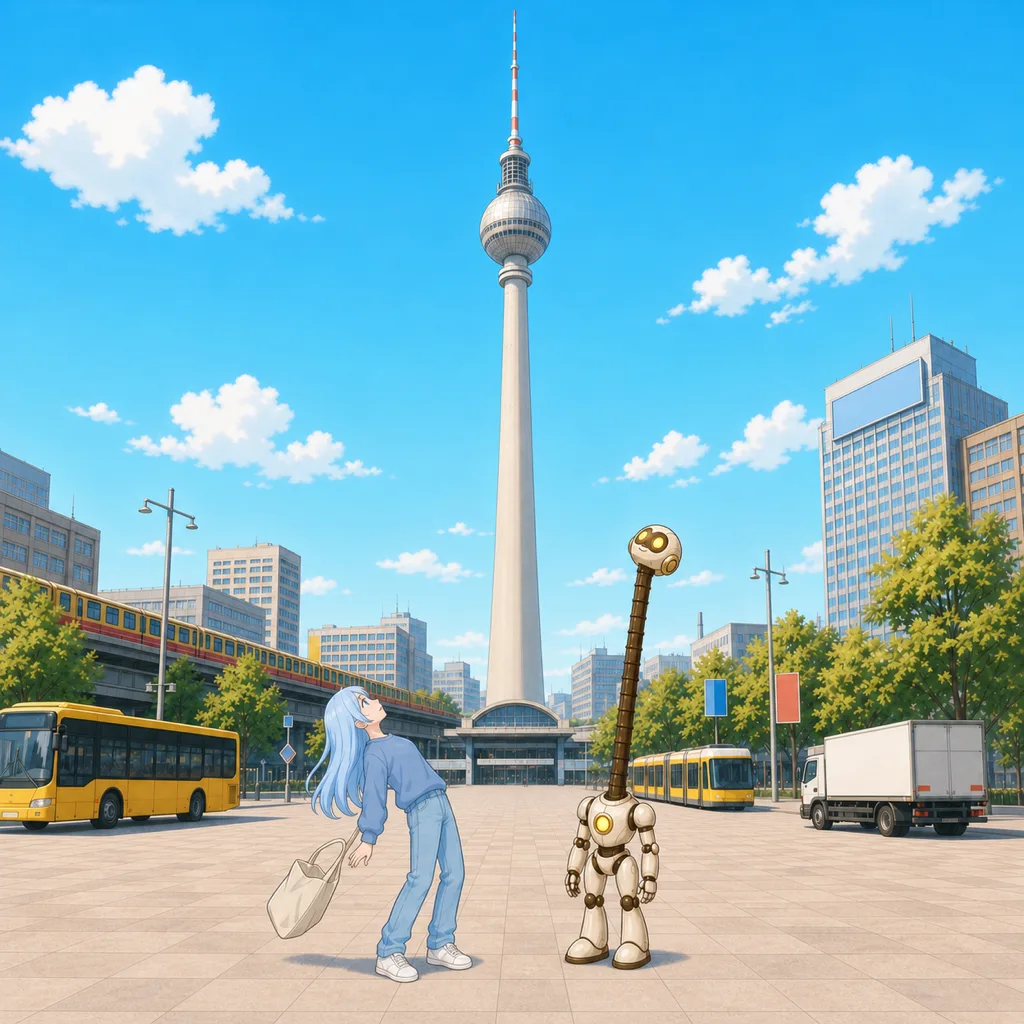
Der Platz ist groß, und in der Mitte steht der Fernsehturm.
The square is big, and the TV Tower stands in the middle.
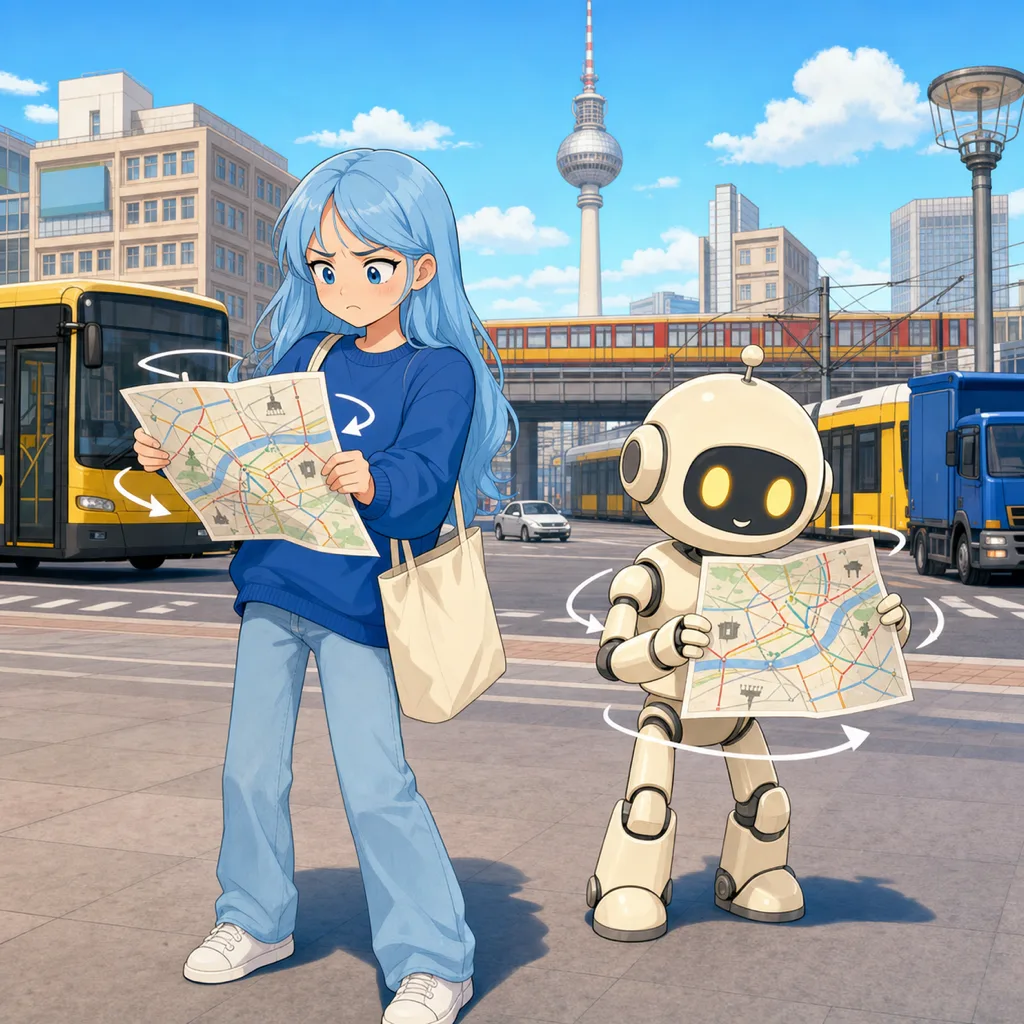
Ich habe eine Karte, aber ich finde die Straße nicht.
I have a map, but I can't find the street.

Ich frage bei der Auskunft.
I ask at the information desk.
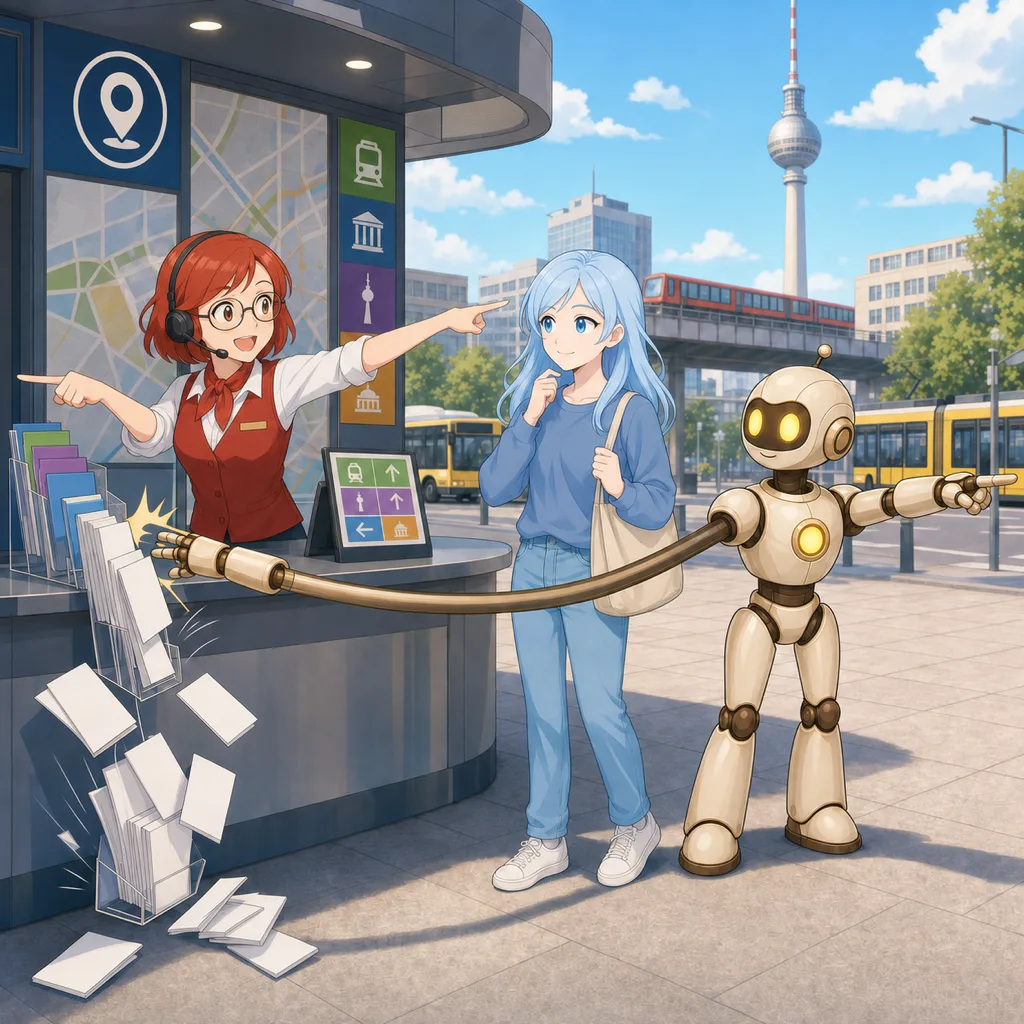
Die Frau sagt: „Gehen Sie geradeaus, dann links.“
The woman says, "Go straight ahead, then left."
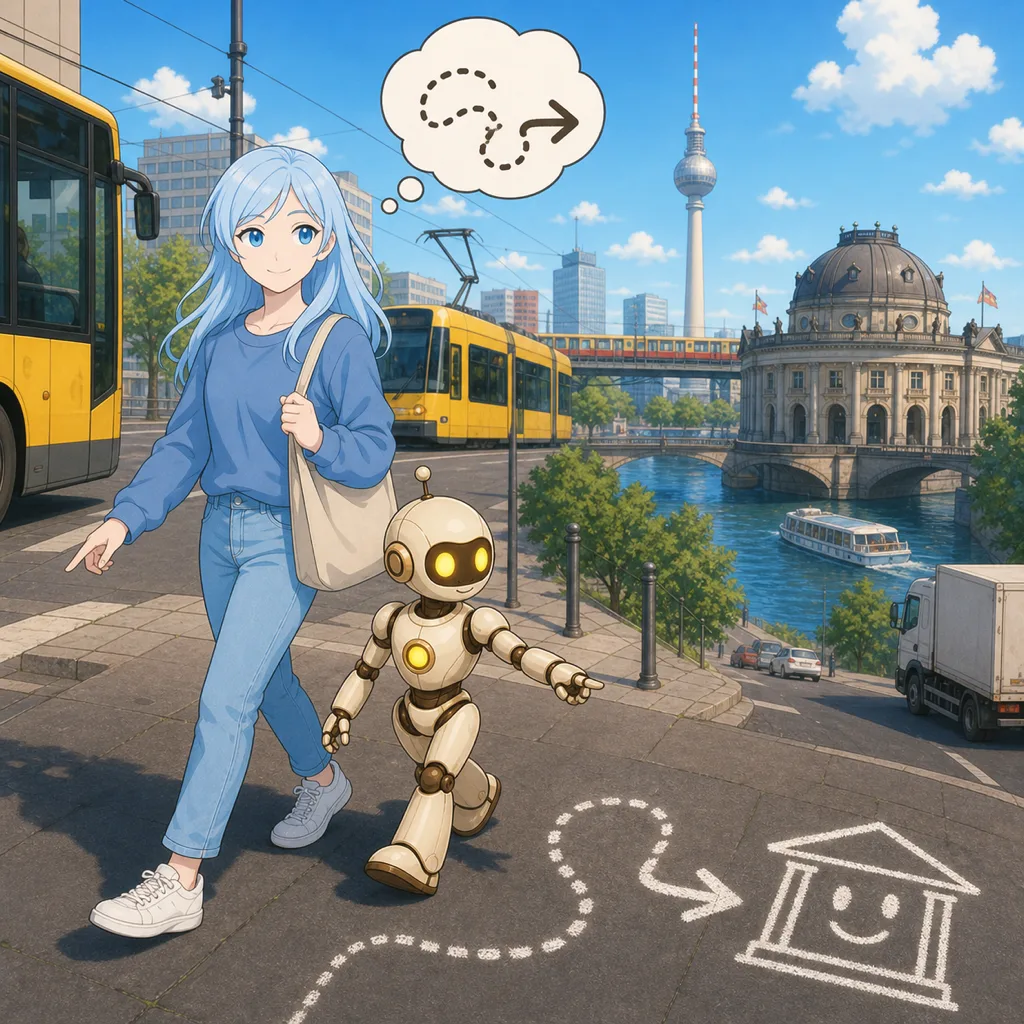
An der Ecke rechts, dann ist das Museum unten am Fluss.
At the corner, go right, then the museum is down by the river.
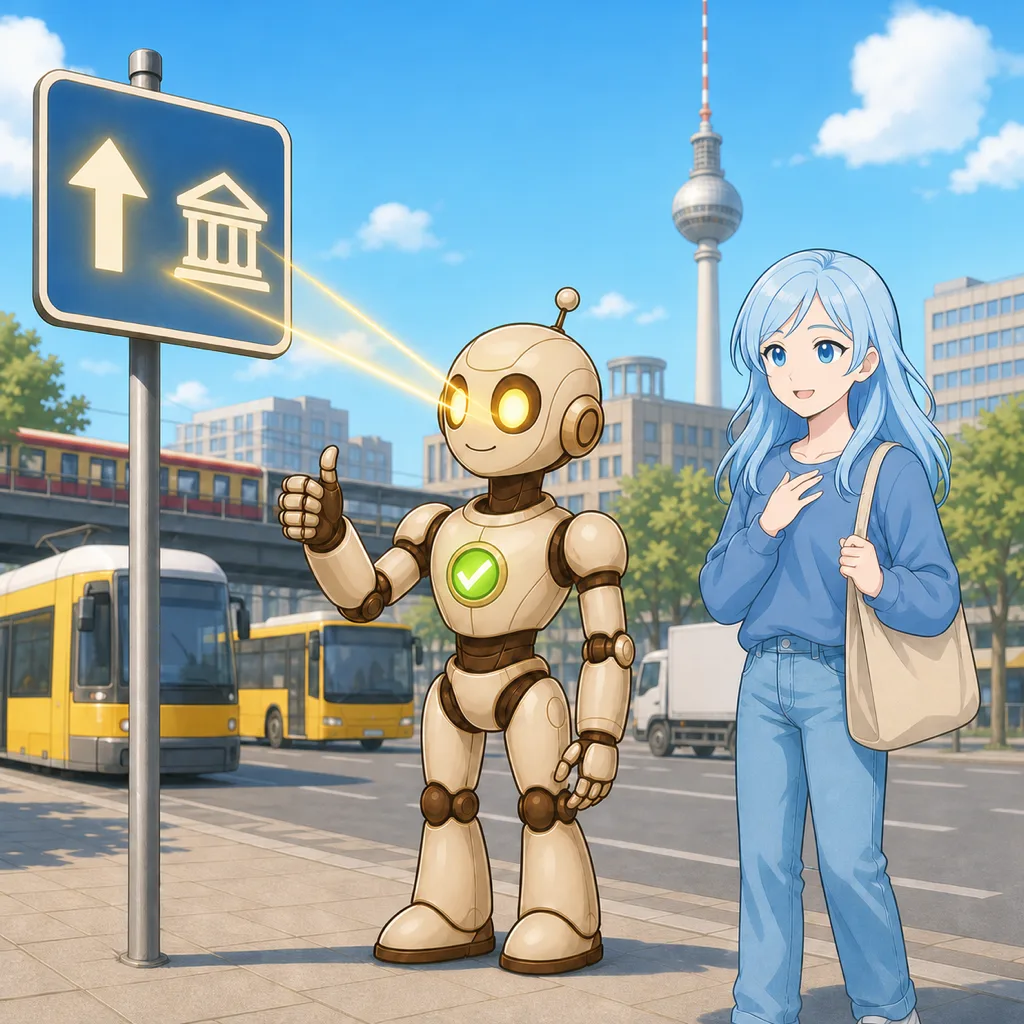
Mobi liest das Schild. Wir gehen richtig.
Mobi reads the sign. We're going the right way.
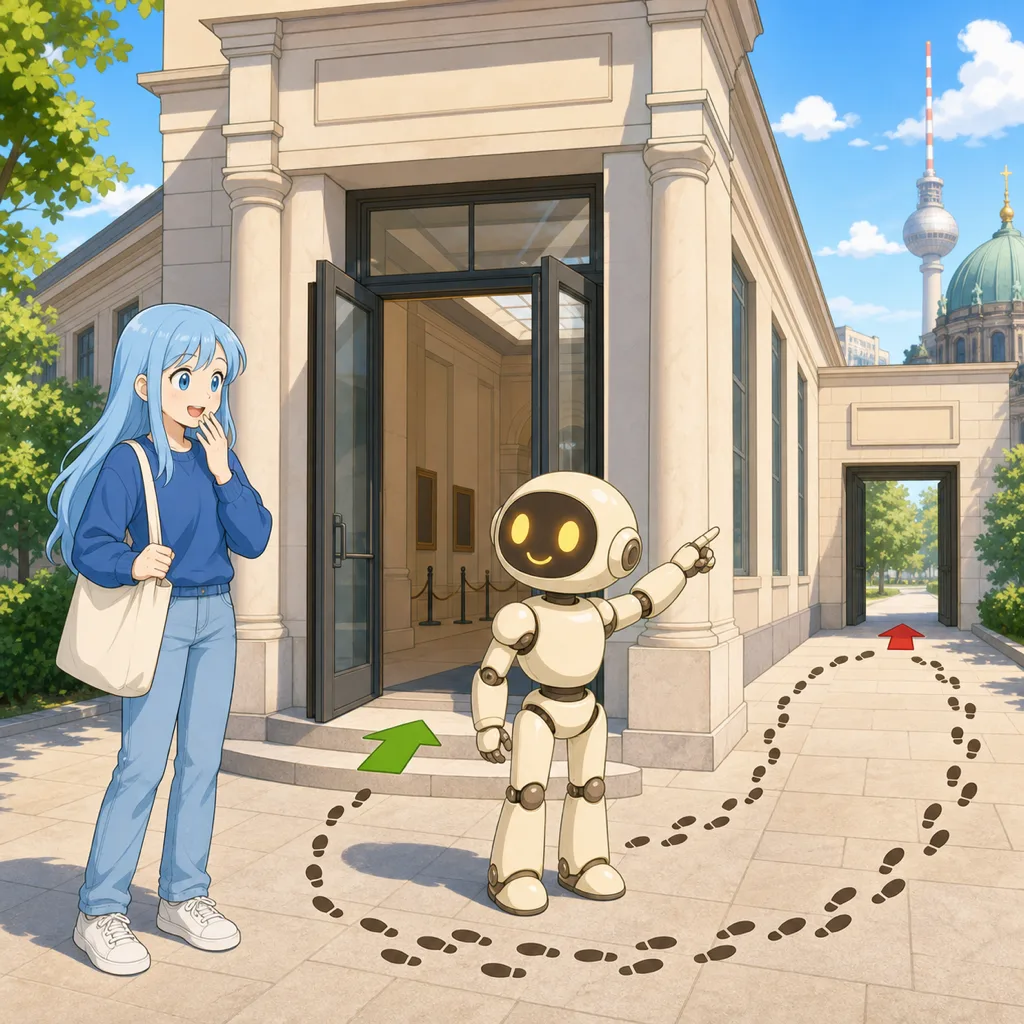
Der Eingang ist vorne, der Ausgang hinten.
The entrance is at the front, the exit at the back.

Leo kommt mit dem Fahrrad. Er ist schneller als der Bus!
Leo comes by bike. He's faster than the bus!
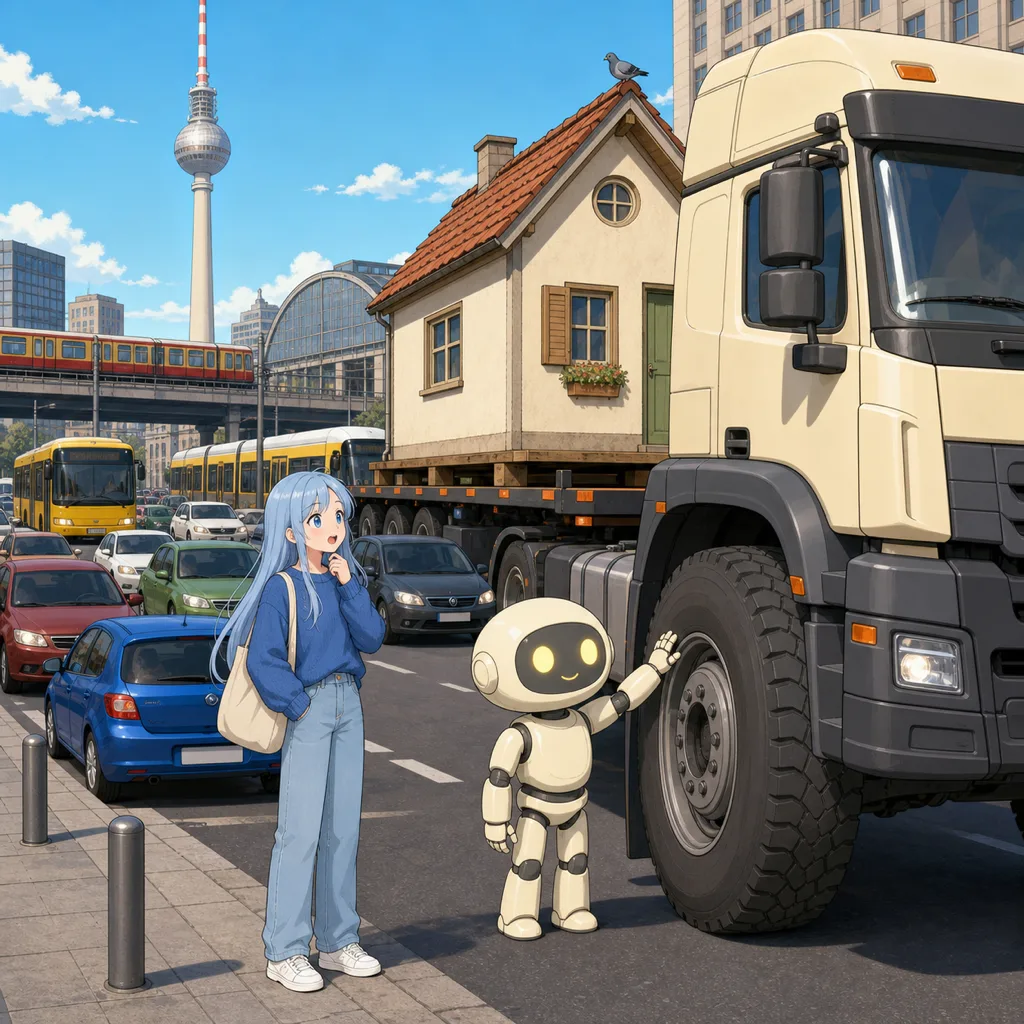
Auf der Straße sind viele Autos und ein großer Lkw.
There are many cars on the street and one big truck.
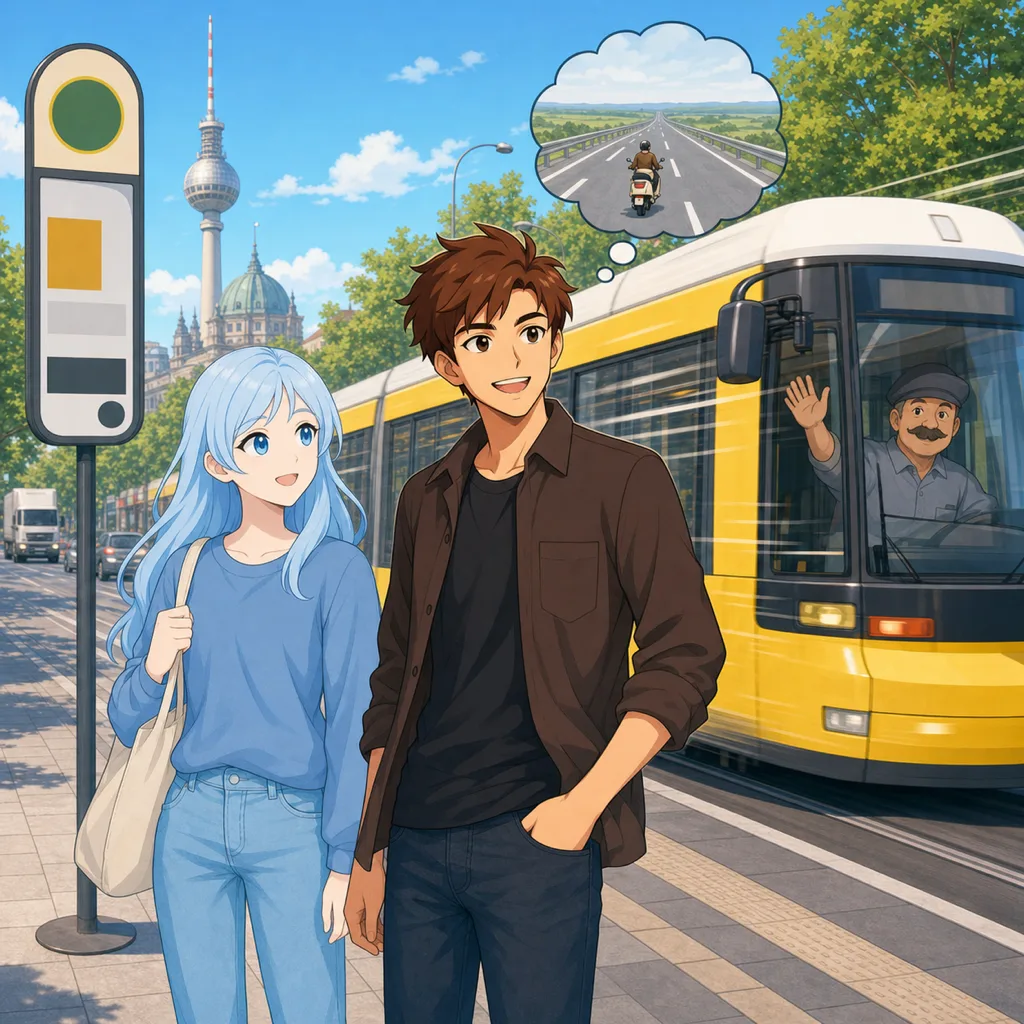
Die Autobahn ist weit weg. Hier fahren nur Busse und Straßenbahnen.
The highway is far away. Only buses and trams run here.
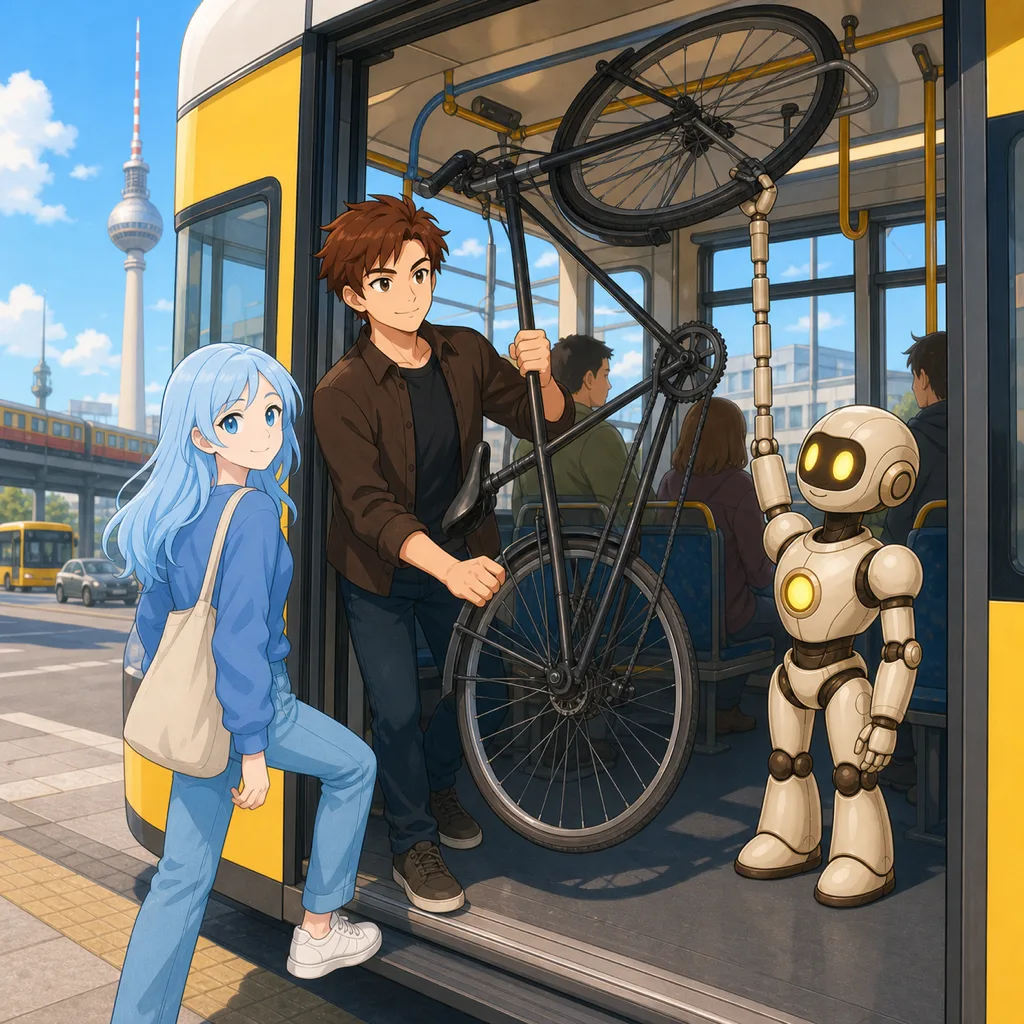
Zurück nehmen Leo, Mobi und ich die Straßenbahn.
On the way back, Leo, Mobi, and I take the tram.
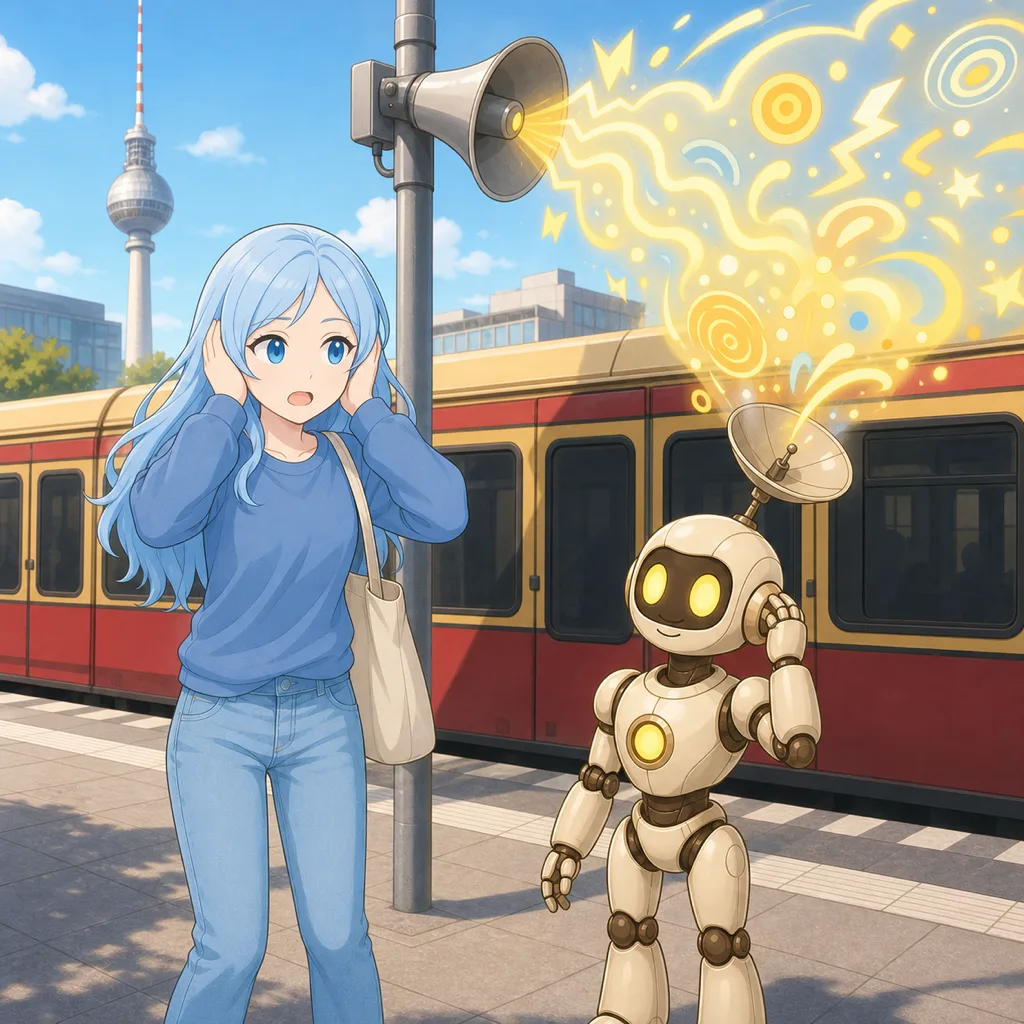
Die S-Bahn fährt heute nicht. Es gibt eine Durchsage.
The S-Bahn isn't running today. There's an announcement.
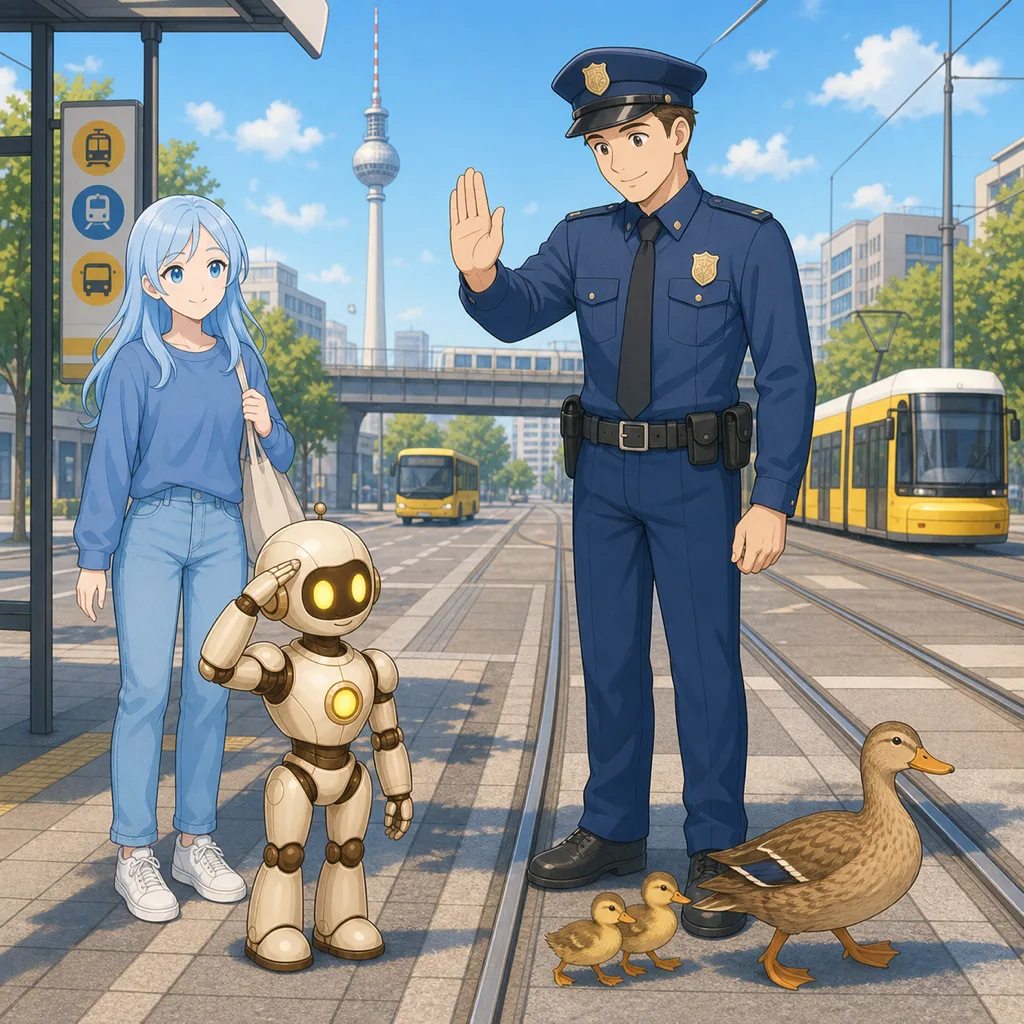
Die Polizei steht an der Haltestelle. Alles ist okay.
The police are standing at the stop. Everything is okay.
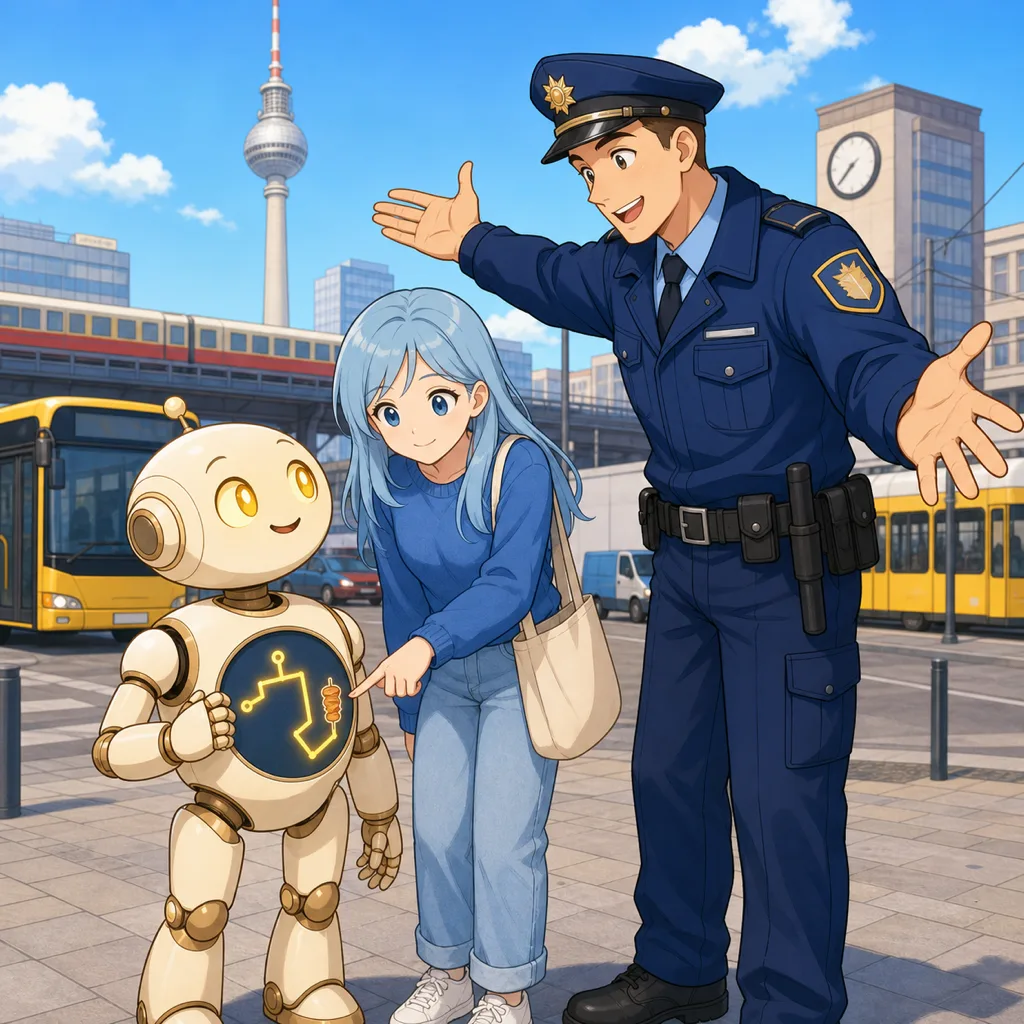
Mobi fragt die Polizei nach dem Weg.
Mobi asks the police for directions.

Am Abend nehme ich mit Leo und Mobi ein Taxi.
In the evening, I take a taxi with Leo and Mobi.
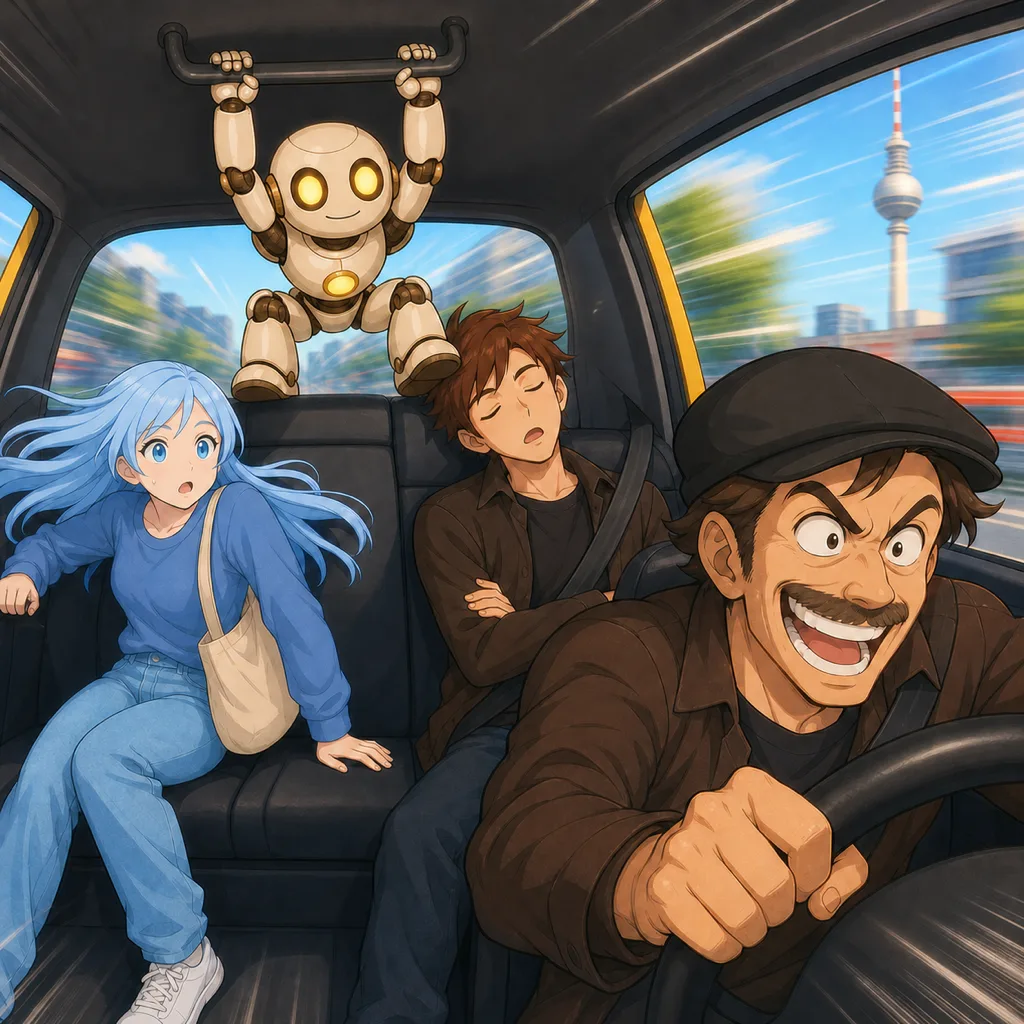
Der Taxifahrer fährt schnell. Mobi hält sich fest.
The taxi driver drives fast. Mobi holds on tight.

Die Stadt ist schön, aber sehr groß. Jetzt bin ich müde.
The city is beautiful, but very big. Now I'm tired.