
[A1] School & Learning ① “Mobi’s Homework”
Monday’s lesson. Mr. Schmidt writes new words on the board and explains them with examples. A twenty-letter word; reading and answering; pencil and ballpoint pen; group conversation (German only!); and Leo—who never did homework—actually does it today. Twenty-six sentences on lessons, vocabulary, sentences, questions, answers, comprehension, and repetition come together as one episode.
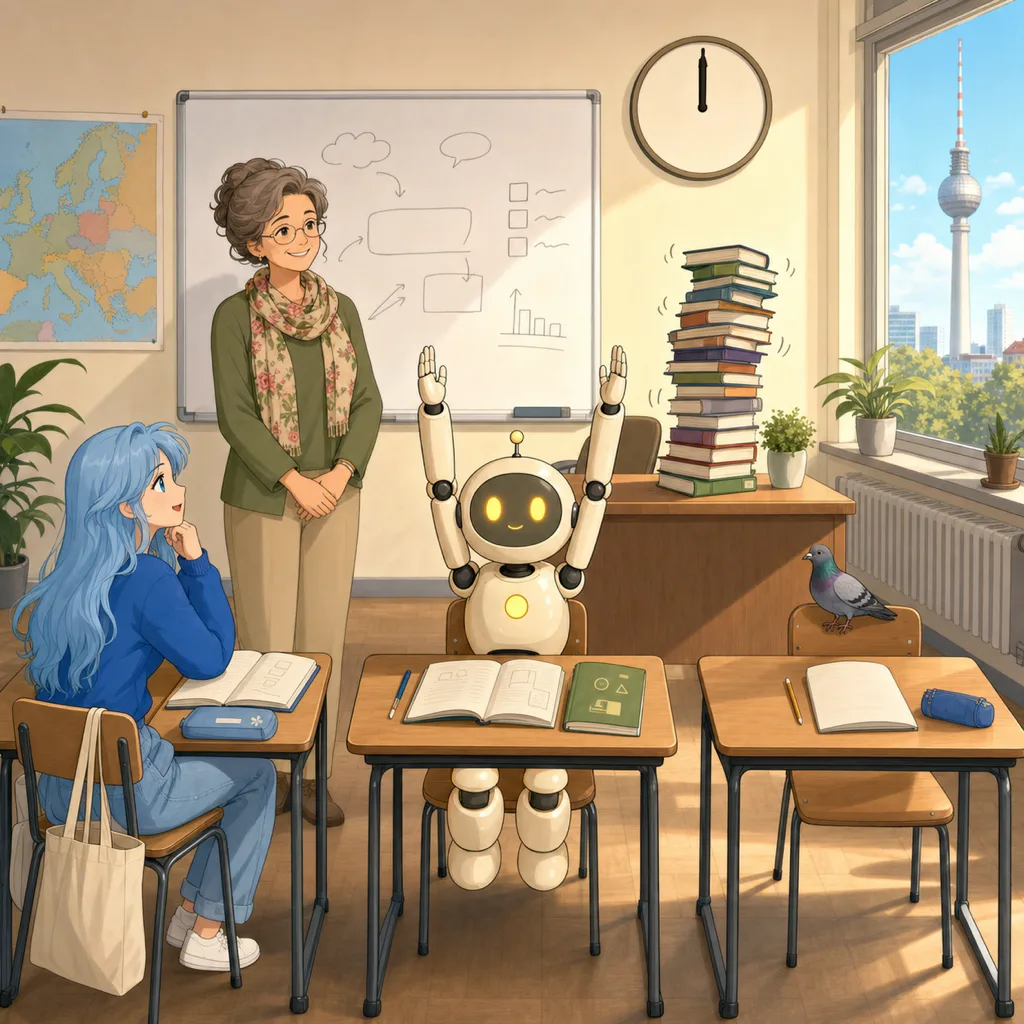
Am Montag beginnt der Unterricht um neun Uhr.
On Monday, class starts at nine.
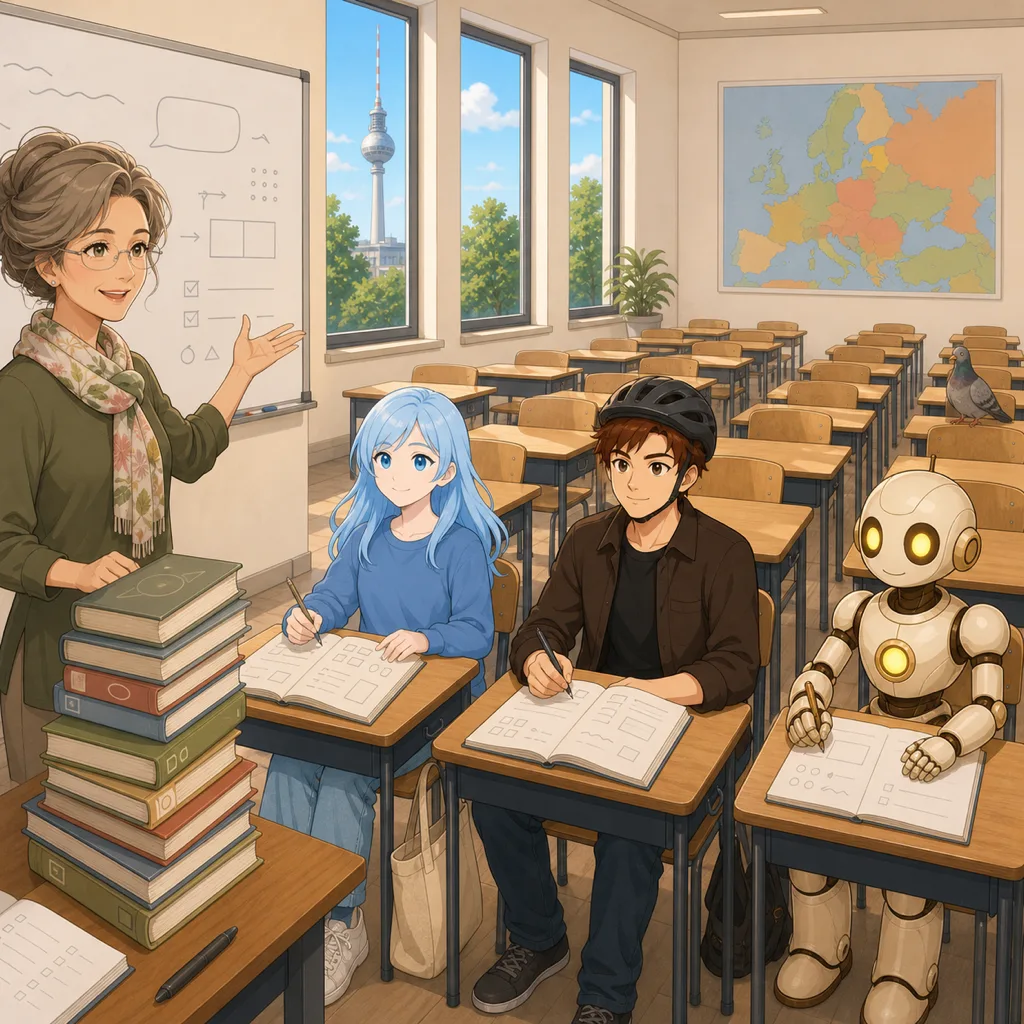
Die Klasse ist klein: nur drei Schüler, Luna, Leo und Mobi.
The class is small: only three students, Luna, Leo, and Mobi.

Frau Schmidt sagt: „Das Thema heute ist Essen.“
Ms. Schmidt says, "Today's topic is food."
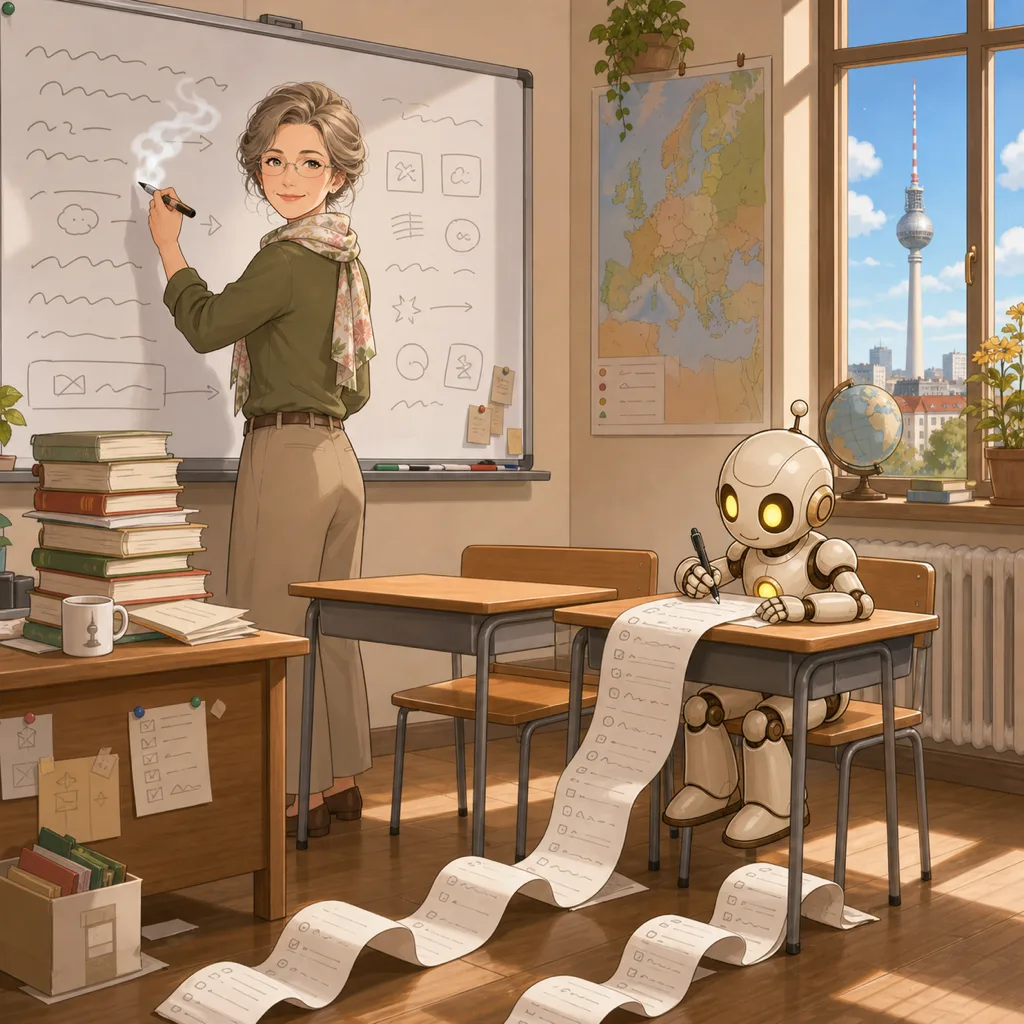
Frau Schmidt schreibt neue Wörter an die Tafel.
Ms. Schmidt writes new words on the board.
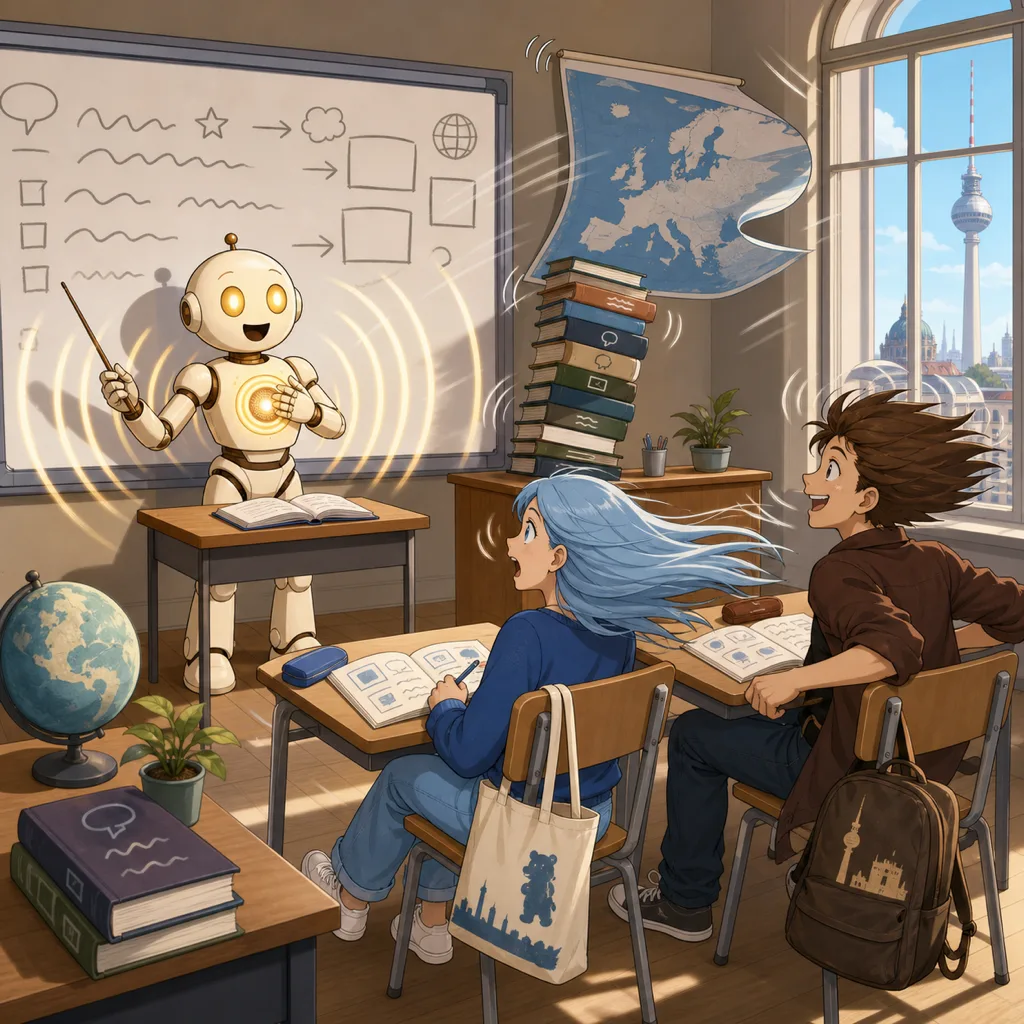
Mobi liest jedes Wort laut.
Mobi reads each word out loud.
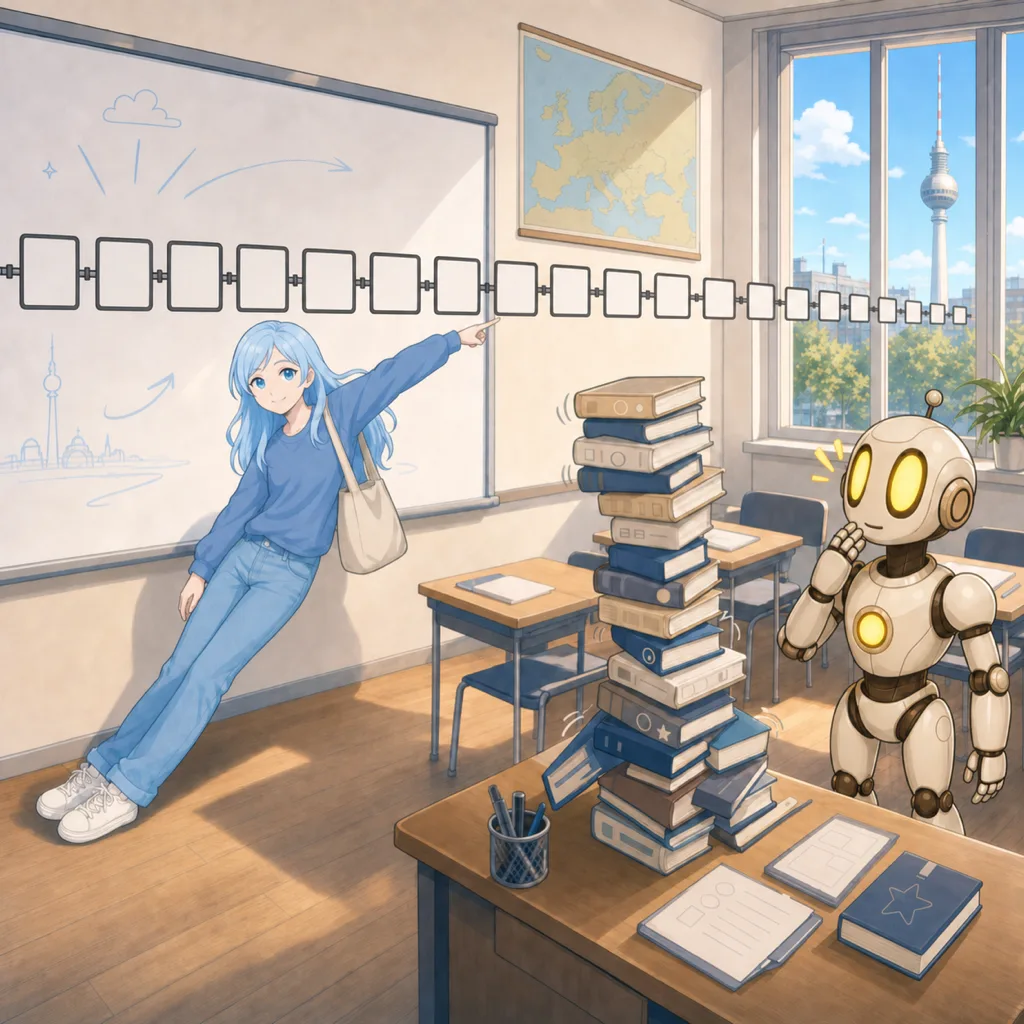
Ein Wort ist sehr lang: Es hat zwanzig Buchstaben.
One word is very long: it has twenty letters.
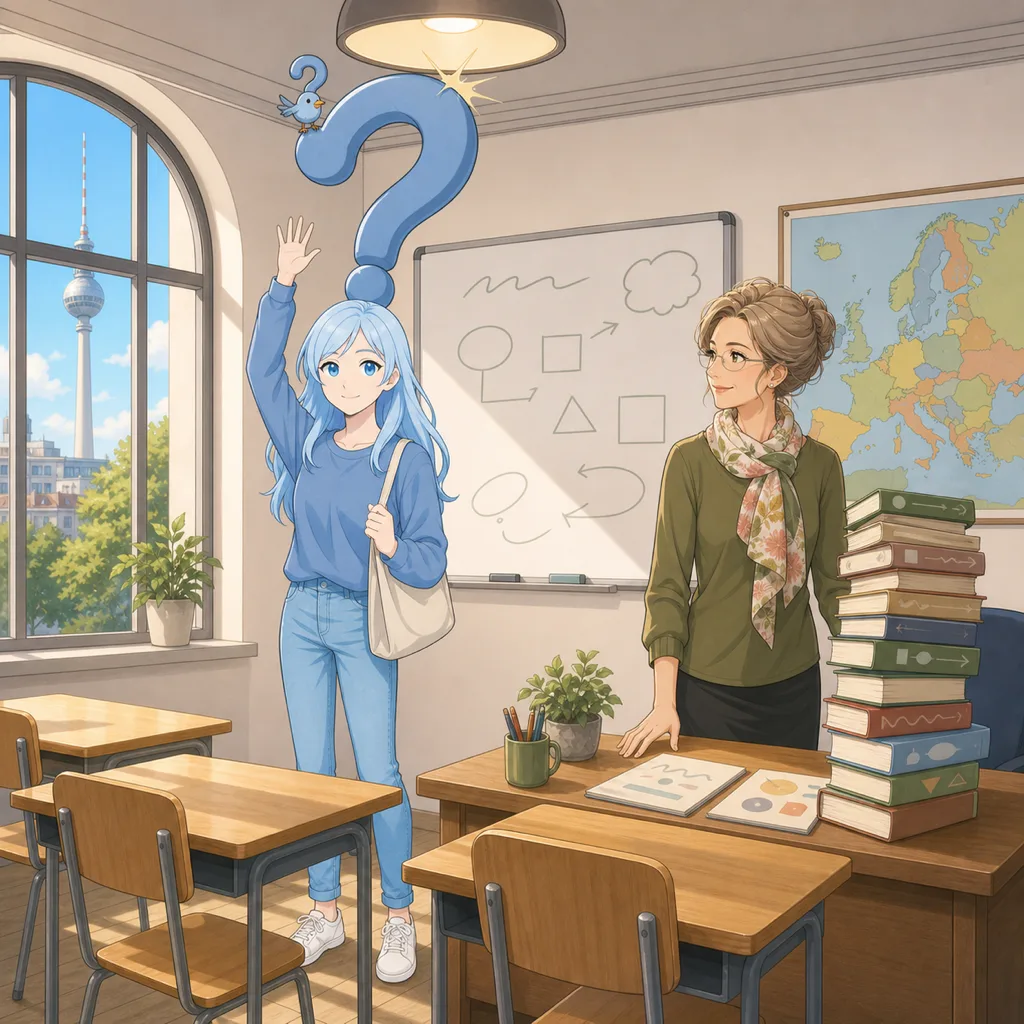
Was bedeutet das Wort? Ich frage Frau Schmidt.
What does the word mean? I ask Ms. Schmidt.
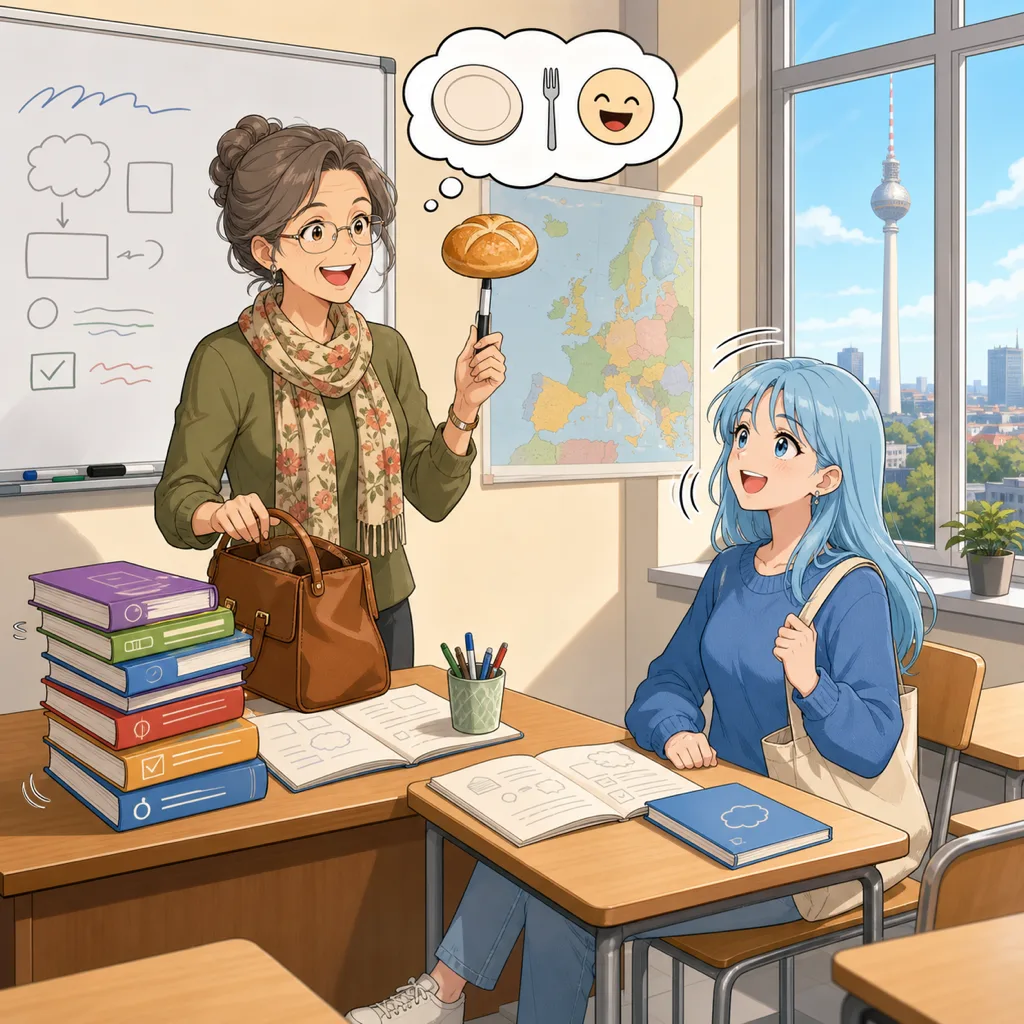
Frau Schmidt erklärt das Wort mit einem Beispiel.
Ms. Schmidt explains the word with an example.

Jetzt verstehe ich den Satz.
Now I understand the sentence.

Leo versteht nichts. Frau Schmidt wiederholt den Satz.
Leo doesn't understand anything. Ms. Schmidt repeats the sentence.
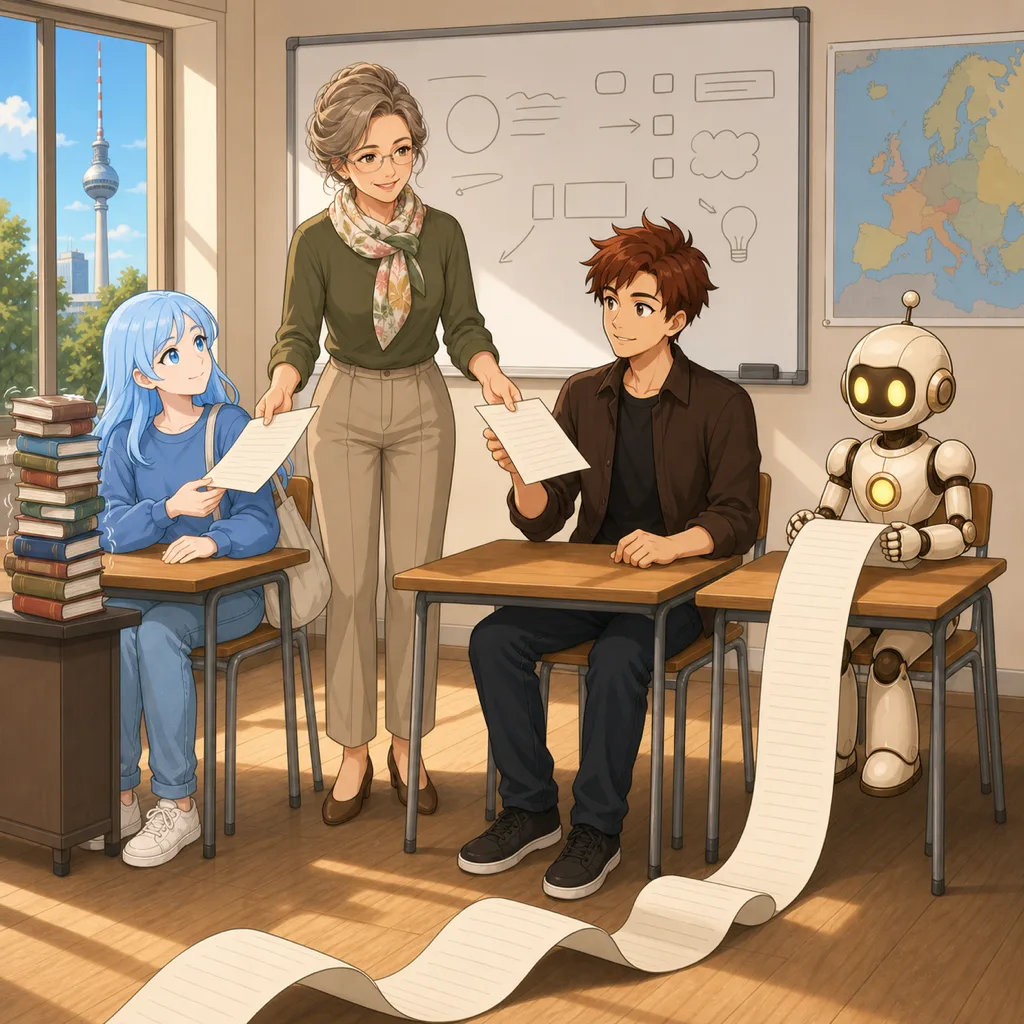
Die Aufgabe ist einfach: Lies den Text und antworte auf die Fragen.
The task is simple: read the text and answer the questions.

Ich lese den Text zweimal.
I read the text twice.
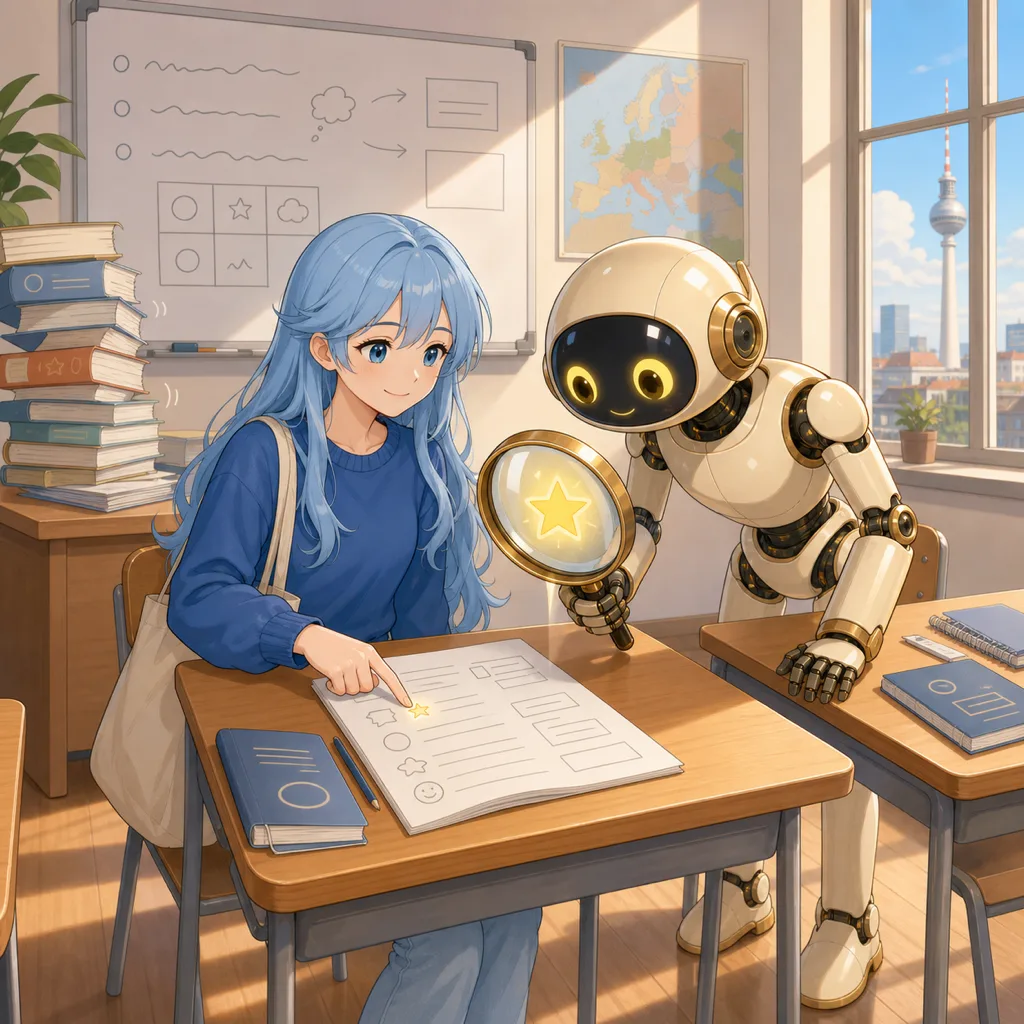
Die erste Frage ist leicht. Die Antwort steht im Text.
The first question is easy. The answer is in the text.
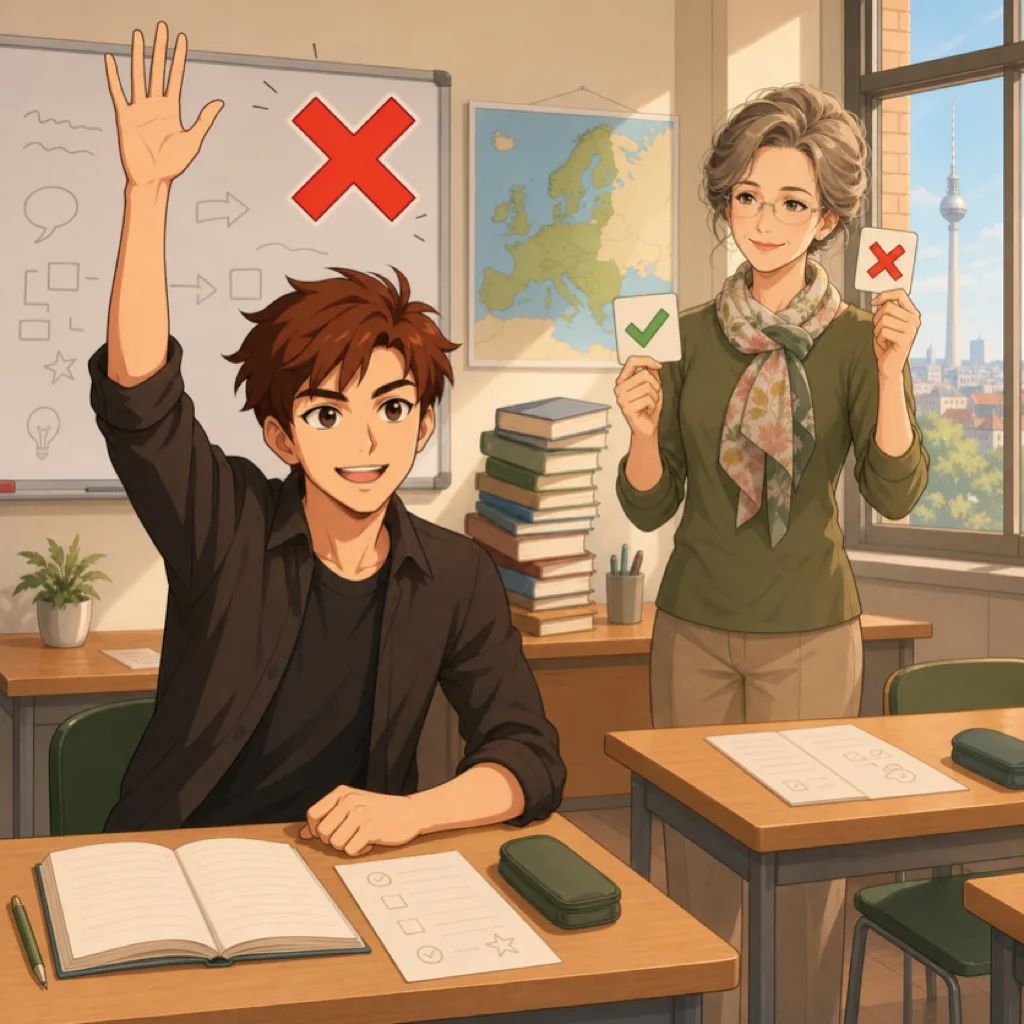
Leo antwortet schnell, aber falsch.
Leo answers quickly, but he's wrong.

Mobi schreibt alles mit dem Bleistift auf Papier.
Mobi writes everything on paper with a pencil.
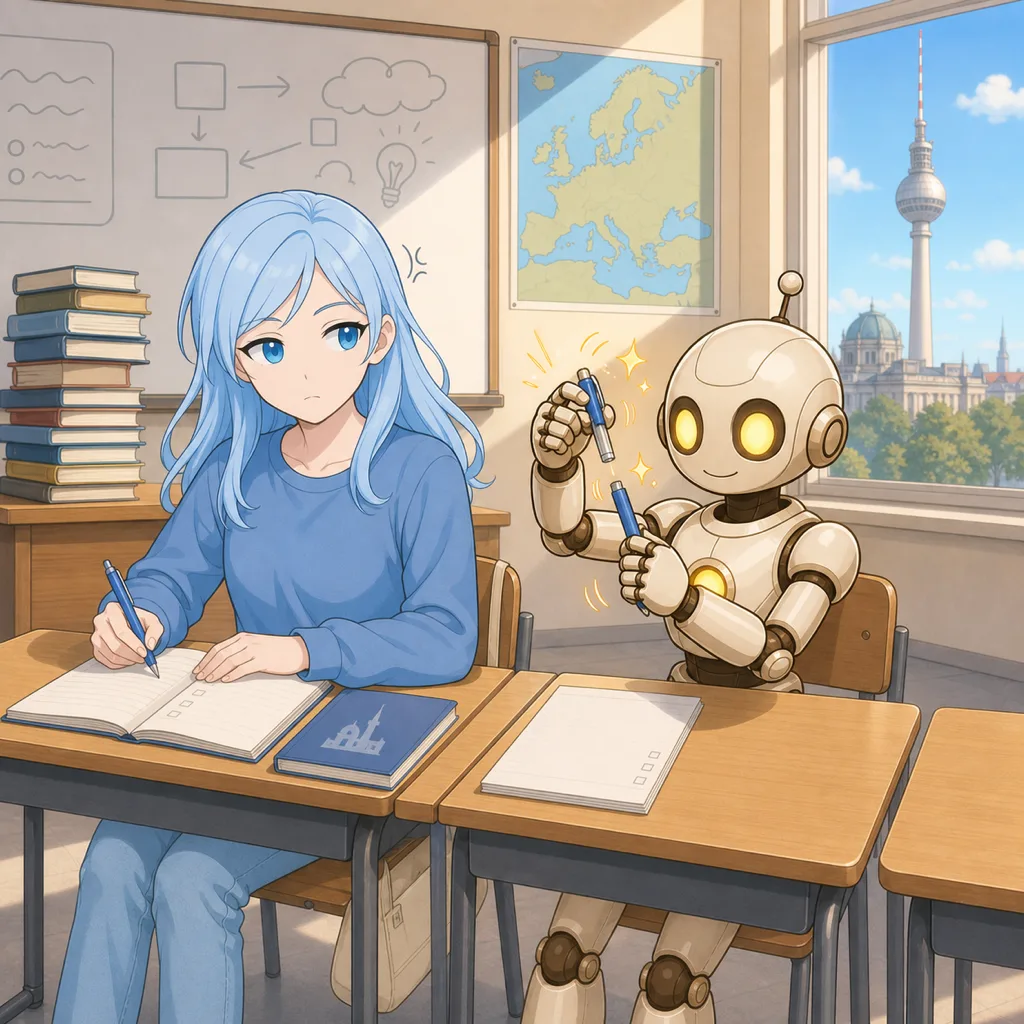
Ich schreibe mit dem Kugelschreiber.
I write with a ballpoint pen.
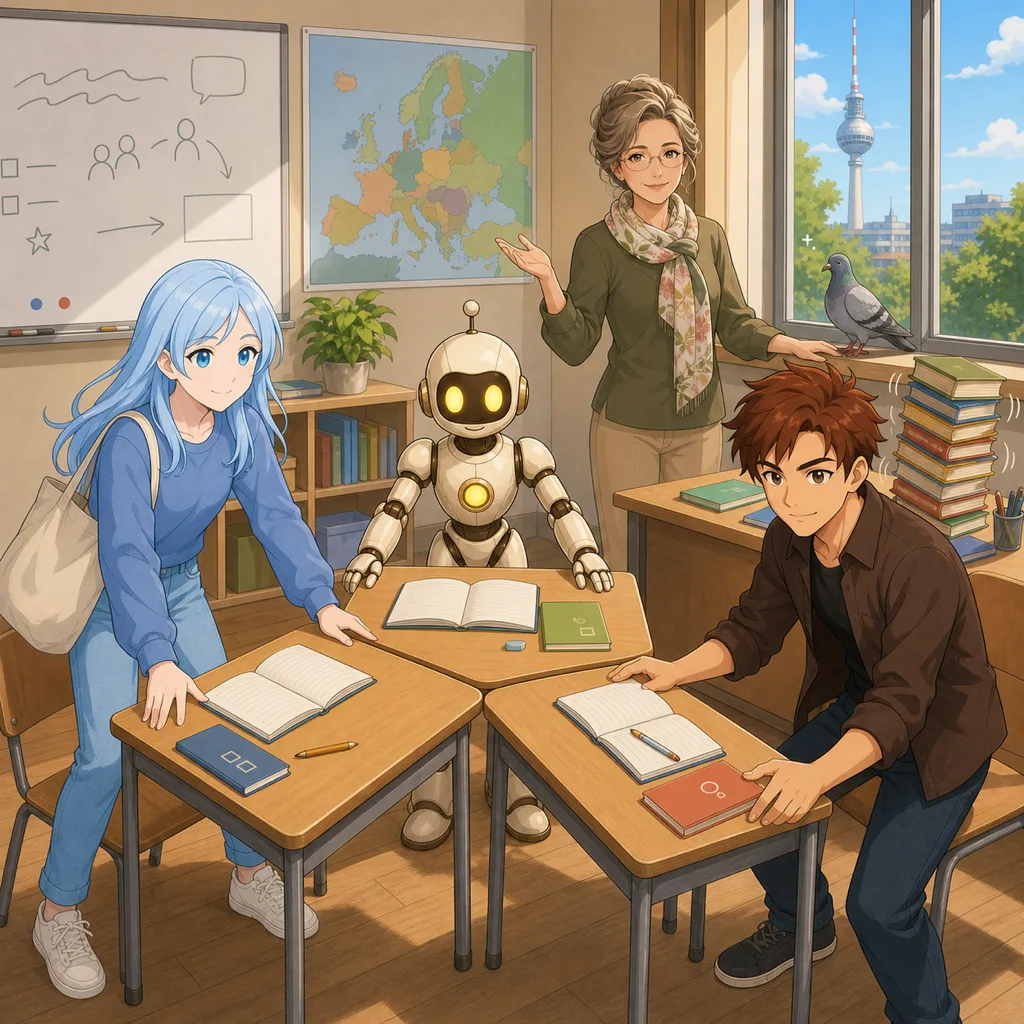
Frau Schmidt sagt: „Jetzt sprecht ihr in Gruppen.“
Ms. Schmidt says, "Now speak in groups."

Meine Gruppe: Leo, Mobi und ich.
My group: Leo, Mobi, and me.

Das Gespräch ist auf Deutsch. Kein Koreanisch, kein Italienisch!
The conversation is in German. No Korean, no Italian!
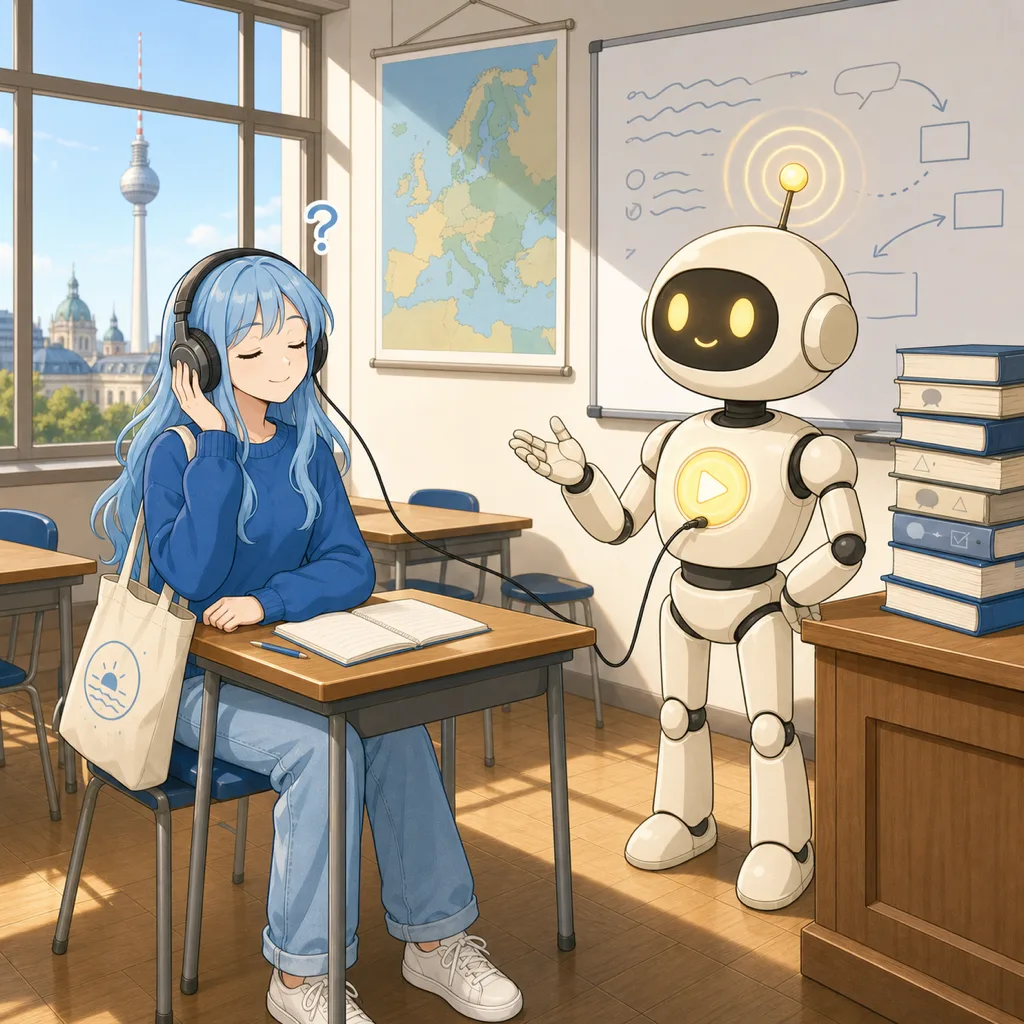
Ich höre einen Dialog und verstehe fast alles.
I listen to the dialogue and understand almost everything.

Deutsch ist eine schwere Sprache, aber ich lerne schnell.
German is a hard language, but I learn quickly.
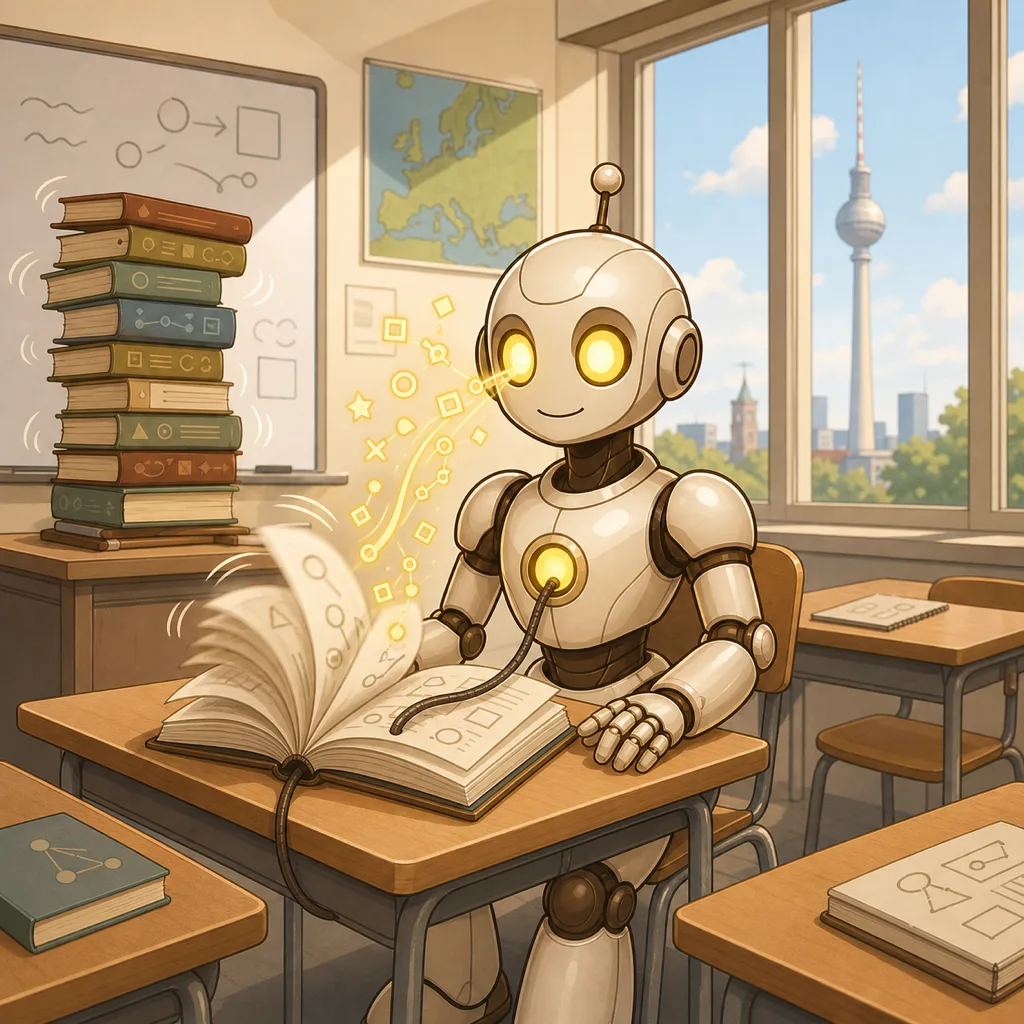
Mobi lernt die Wörter aus dem Buch.
Mobi learns the words from the book.
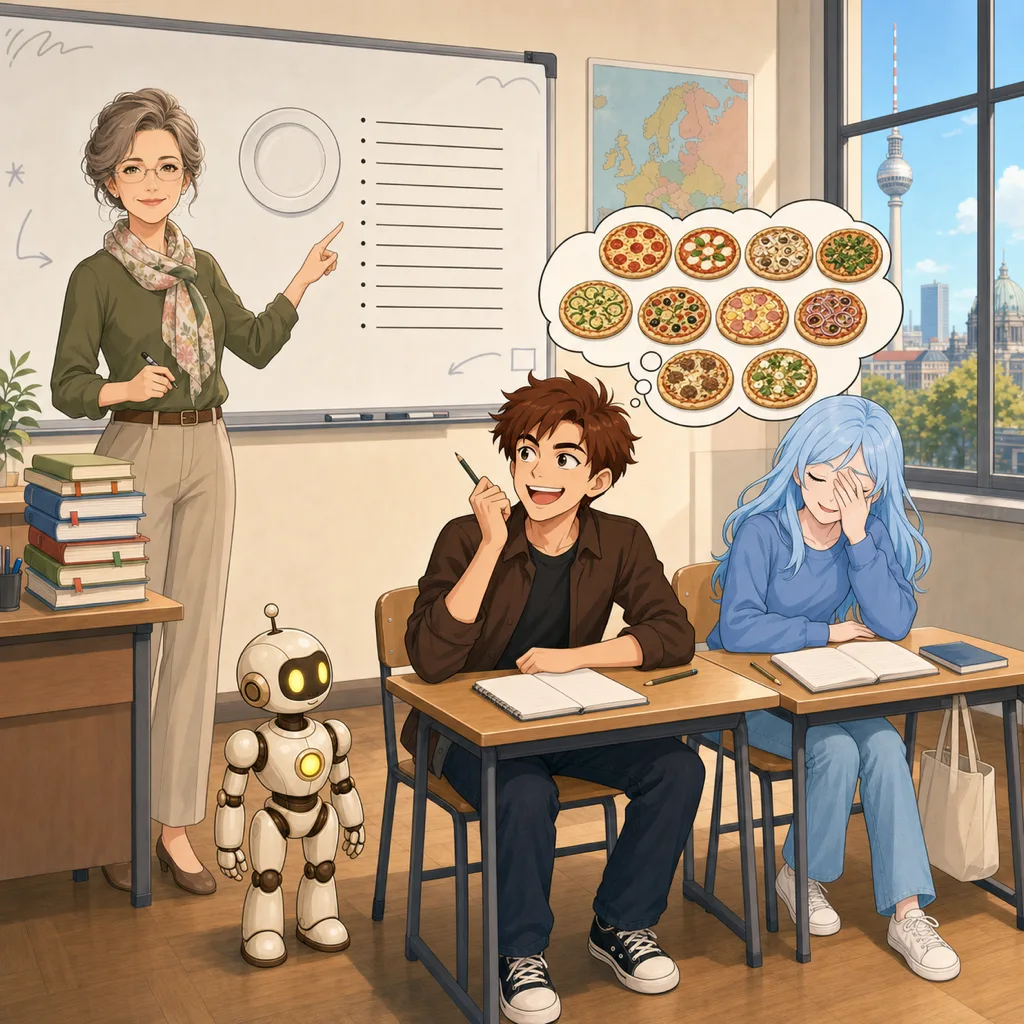
Die Hausaufgabe: zehn Sätze über das Essen schreiben.
Homework: write ten sentences about food.
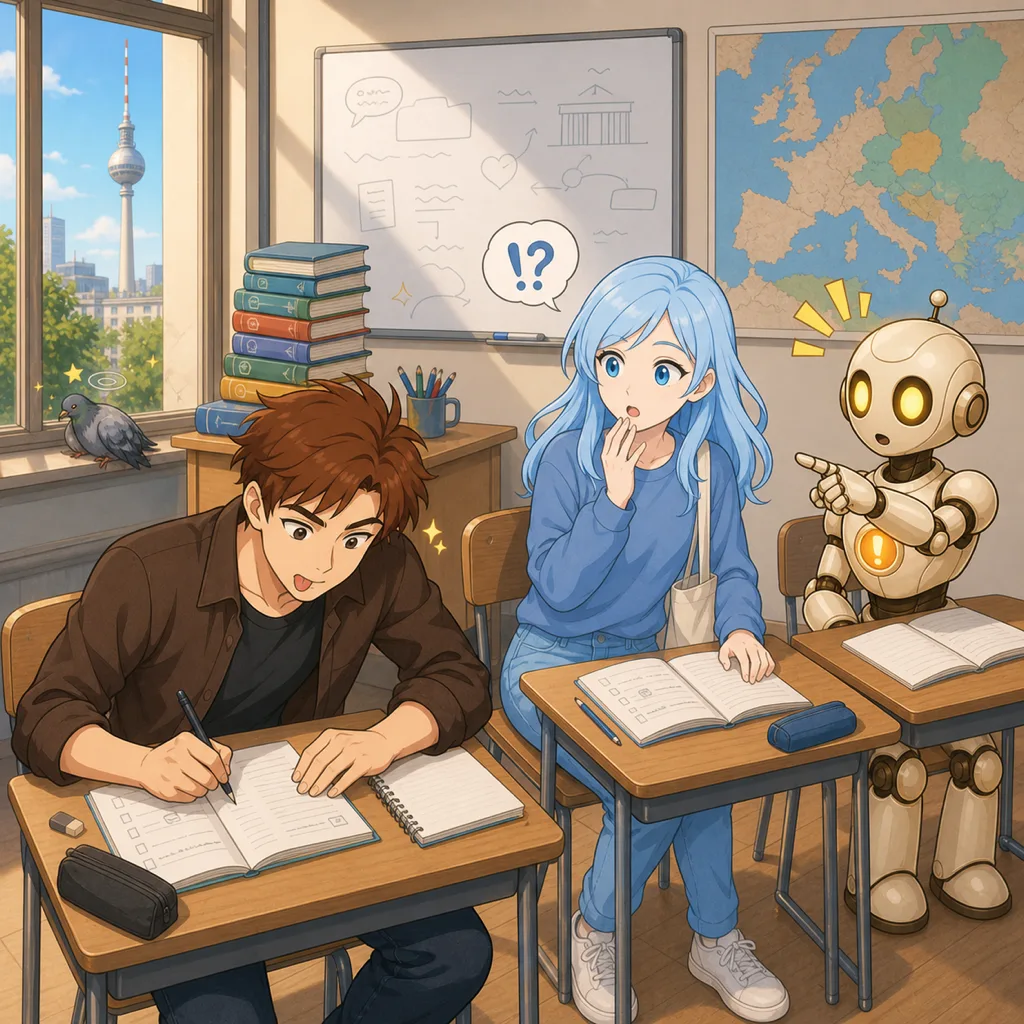
Leo macht die Hausaufgabe nie. Heute macht er sie!
Leo never does the homework. Today he does!
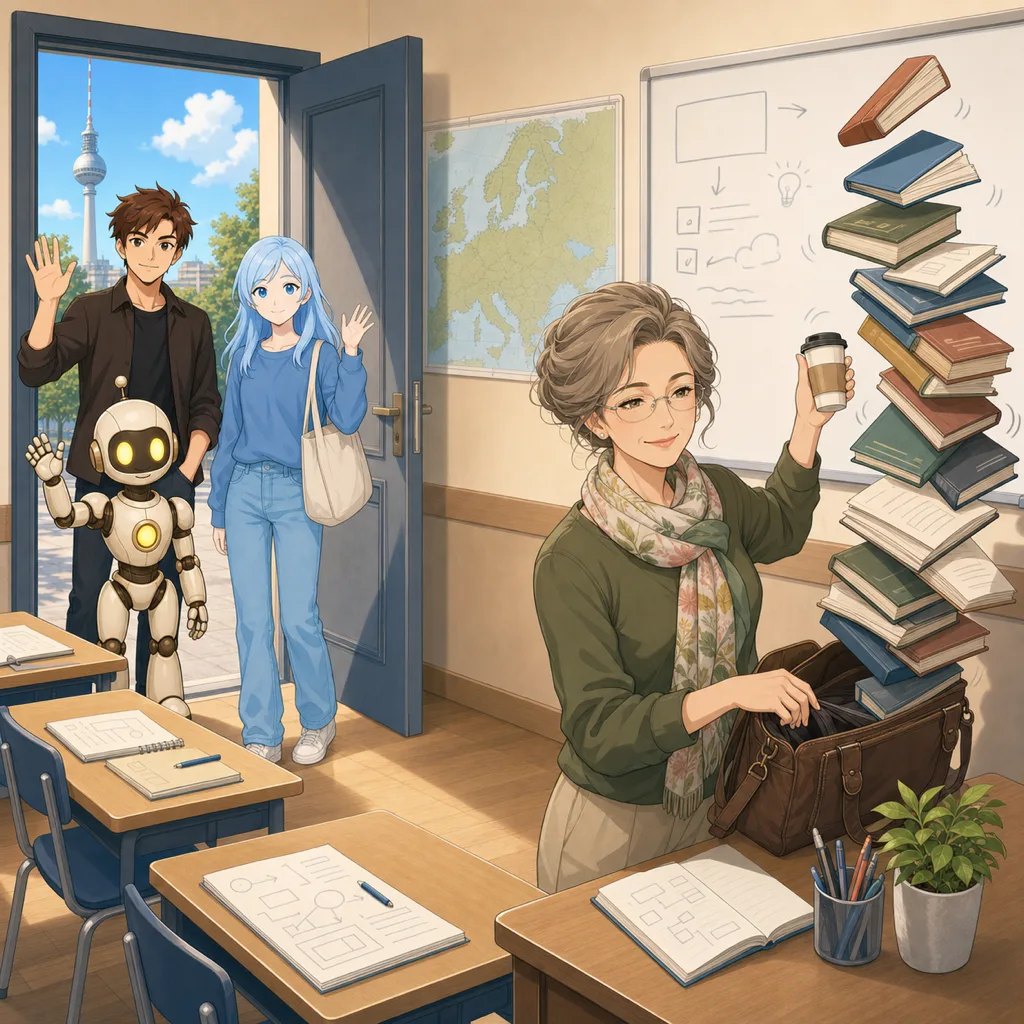
Der Kurs ist zu Ende. Bis morgen, Frau Schmidt!
Class is over. See you tomorrow, Ms. Schmidt!
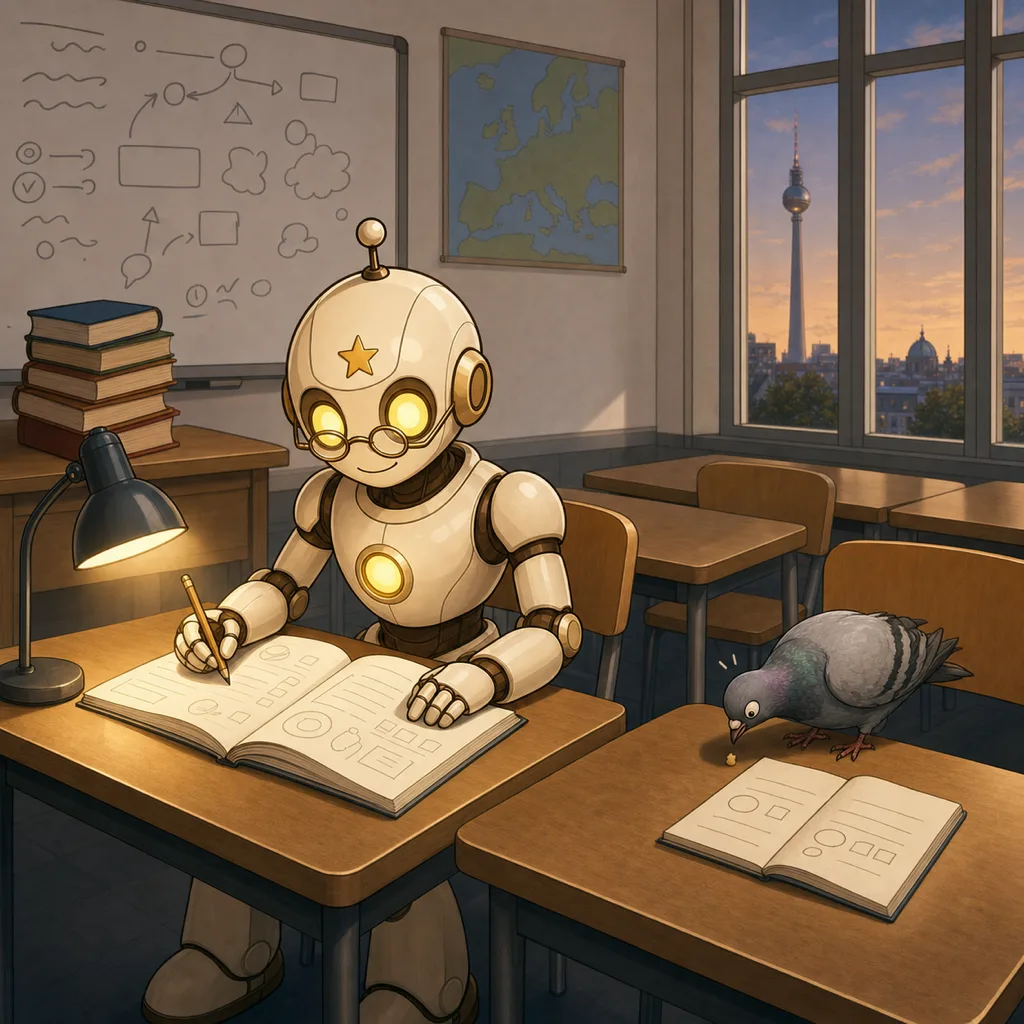
Nach dem Unterricht lernt Mobi weiter. Er ist ein guter Schüler.
Even after class, Mobi keeps studying. He is a good student.